
Last updated October 16, 2026
 Water damage drying
 Fire & smoke cleanup
 Mold remediation
 Storm response
 Sewage cleanup
 Reconstruction
Free visual inspection and a written scope of work before any mitigation begins - photos, moisture readings, and drying logs go in your claim file
The scope we write is the scope we bill. Anything new gets shown to you, in writing, before we touch it.
Get your free estimateDIY vs Professional Damage Restoration: The Austin Homeowner’s Decision Guide
A homeowner in Austin can dry a flooded bathroom with two box fans from Walmart and a dehumidifier rented from Home Depot. The tile feels dry to the touch in about 48 hours. What they can’t feel is the 19% moisture content still trapped in the subfloor, which is all mold needs to colonize within a week. This guide walks through the real decision behind DIY versus professional damage restoration: not whether you can dry it, but whether you can prove it’s dry, in a way your insurance company and a future home inspector will accept. For how to hire a damage restoration contractor in Austin, see our step-by-step guide. We’ve handled thousands of water damage jobs across Austin, from Mueller to Circle C, and the most expensive ones are usually the ones someone tried to fix first.
Quick Answer
DIY water damage restoration is only safe when three conditions are all met: the water is confirmed clean (Category 1, like a supply line break), the affected area is under 10 square feet, and no wall cavities, subfloor, or insulation are involved. Anything beyond that, in Austin’s humid climate, requires professional-grade psychrometric drying and IICRC S500-compliant moisture documentation that a homeowner physically cannot produce. If you have any doubt about the water source or the extent of the damage, call a professional before you touch anything.
Restoration work we handle
Table of Contents
- The Three-Part Test for Safe DIY Eligibility
- What Professional Psychrometric Drying Actually Does
- Why Austin’s Climate Makes DIY Drying Harder Than You Think
- The Insurance Documentation Problem With DIY
- Real Cost Comparison: DIY vs Professional in Austin
- The One Scenario Where Partial DIY Makes Sense
- Common Mistakes to Avoid
- When to Call a Professional
- Frequently Asked Questions
The Three-Part Test for Safe DIY Eligibility
We’re going to be direct about this: most water damage situations in Austin homes should not be DIY projects. That’s not because homeowners lack skill. It’s because the failure mode of DIY drying is invisible, delayed, and expensive. Mold grows behind walls, under floors, and inside insulation where you can’t see it until it’s a full remediation job.
Before you decide to handle water damage yourself, run the situation through this three-part test:
- Water source is confirmed clean (Category 1). This means water from a broken supply line, an overflowing sink with clean tap water, or a leaking water heater. If the water came from outside (rain, flood, storm surge), from a sewage backup, from a toilet, or from a washing machine that washed dirty clothes, it’s Category 2 or 3 and requires professional handling. In Category 3 water, you’re dealing with bacteria and pathogens that require antimicrobial treatment and full containment protocols.
- Affected area is under 10 square feet. Small spills on tile or concrete that you caught immediately are manageable. Anything larger than a standard bathroom rug is not. The reason is airflow and dehumidification capacity: consumer equipment simply cannot move enough air through enough material to dry anything bigger than a closet.
- No wall cavities, subfloor, or insulation are involved. If water has wicked up drywall, seeped through flooring, or touched insulation, you cannot see the full extent of the moisture. Water travels laterally and upward. A puddle on the floor is never just a puddle on the floor; it’s already inside the baseboards, under the tile, and wicking up the drywall.
Here’s a real example from Austin. We were called to a home in Hyde Park where a homeowner had a supply line burst under a kitchen sink. The visible puddle was about 3 square feet. He mopped it up, set up a box fan, and called it done. Six weeks later, the kitchen floor started buckling. By the time we opened the subfloor, the moisture had spread across 40 square feet and mold had colonized the joists. The final remediation cost was over $4,000. If he had called us in the first 24 hours, it would have been a fraction of that.
What Professional Psychrometric Drying Actually Does
Psychrometric drying is the science of controlling temperature, humidity, and airflow to remove moisture from building materials at a predictable, measurable rate. It’s what a professional restoration company uses on every job, and it’s the difference between drying a surface and drying a structure.
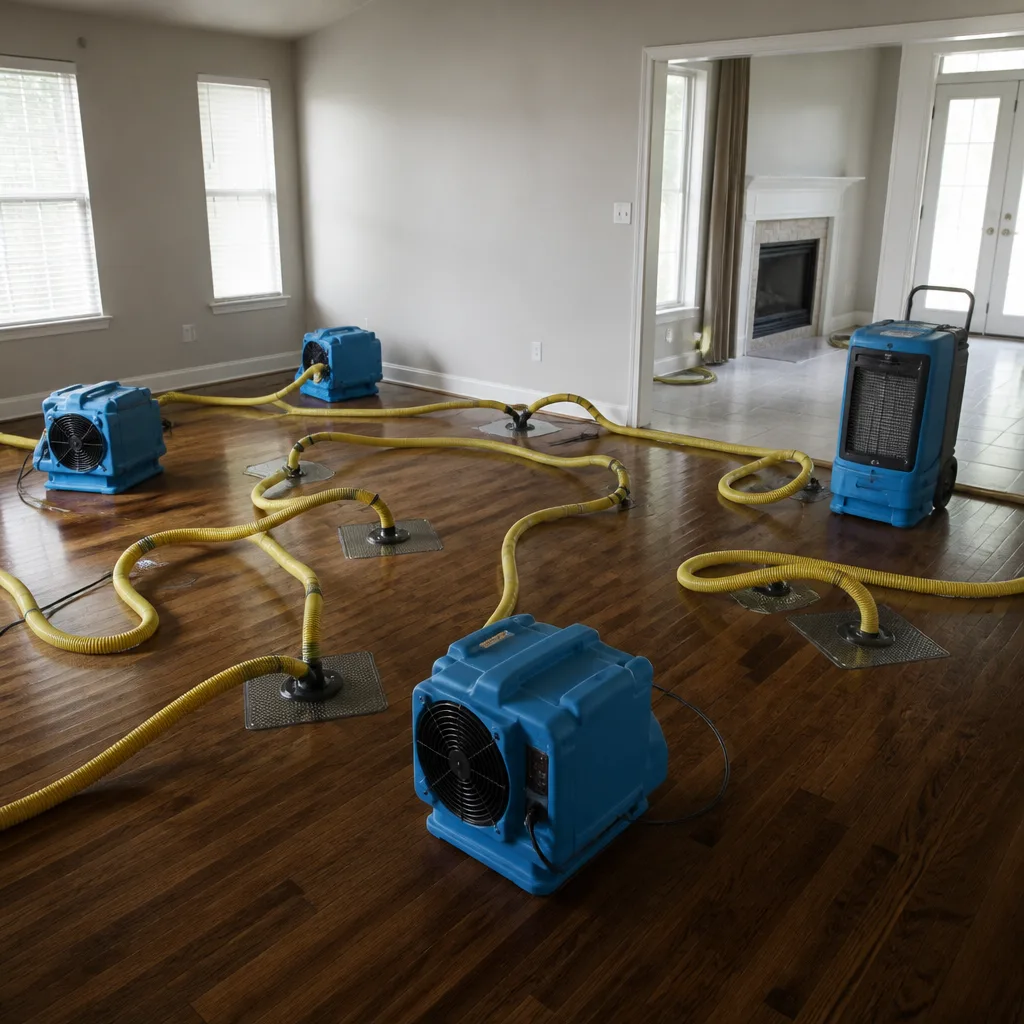
The math matters, especially in Austin. A consumer dehumidifier from a big-box store pulls about 20 to 30 pints of water per day and generates airflow of about 100 to 150 cubic feet per minute (CFM). A professional LGR (low-grain refrigerant) dehumidifier, like the Phoenix or Dri-Eaz units we deploy, pulls 80 to 140 pints per day and pairs with axial air movers that push 2,500 to 3,000 CFM each. In a typical water damage scenario, we’re placing 4 to 6 air movers and 1 to 2 LGR dehumidifiers in a single room.
Why does that matter? Because moisture in building materials doesn’t evaporate on its own. It’s bound to the material by what’s called vapor pressure. To release that moisture, the air moving across the surface has to be dry enough and fast enough to overcome the material’s equilibrium moisture content. Austin’s ambient humidity in July averages 68% to 75%. At those humidity levels, a wet subfloor can take weeks to reach acceptable moisture content with consumer equipment. With professional equipment, we can typically get a Category 1 water loss dry in 3 to 5 days.
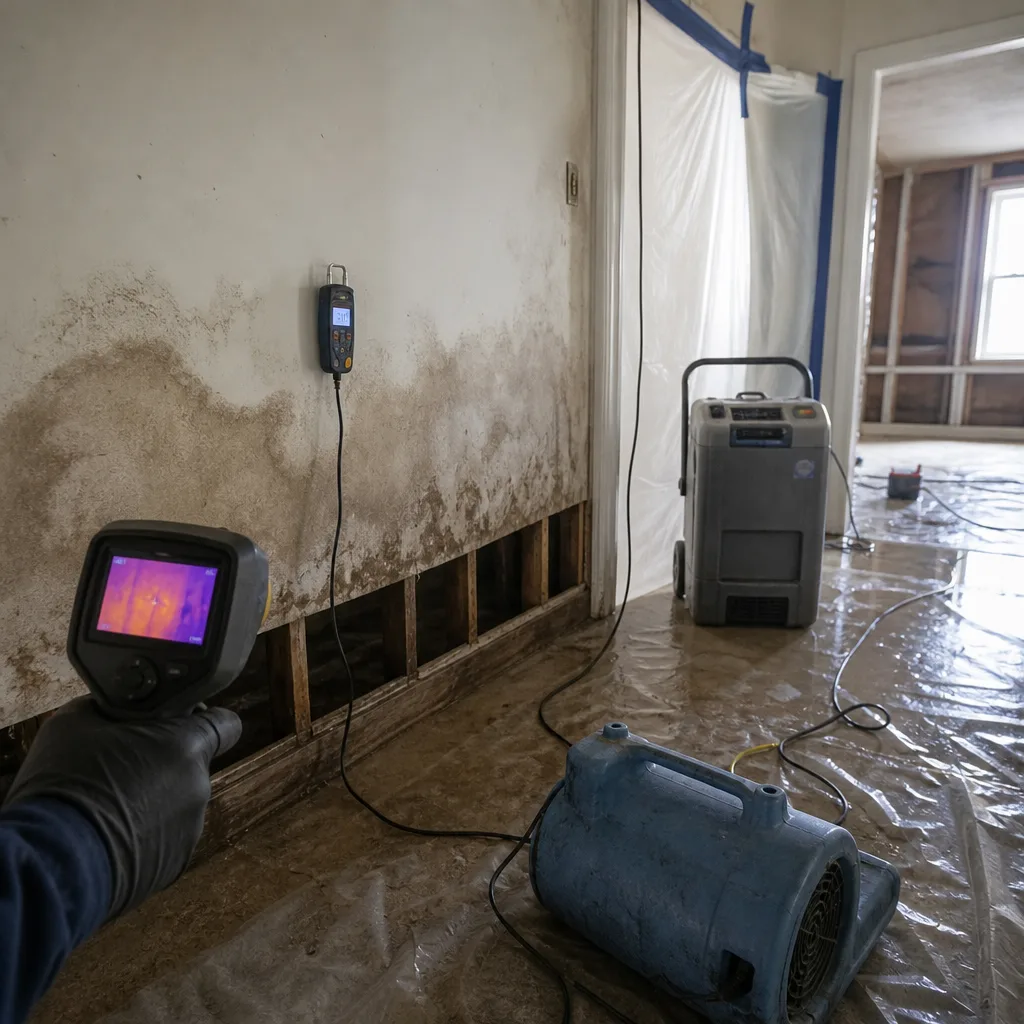
We also use specific tools to measure progress. Moisture meters that read moisture content (MC) at different depths, thermal imaging cameras to find hidden water, and hygrometers to track relative humidity and specific humidity ratios in the air. The goal is not “feels dry.” The goal is a documented moisture content below 14% in wood and below 5% in drywall, verified with readings logged at multiple points in the affected area. A homeowner with a box fan cannot tell you when a subfloor hits 14% MC. We can, and we document it.
Why Austin’s Climate Makes DIY Drying Harder Than You Think
Austin sits in a unique climate band. It’s hot, it’s humid, and it gets a lot of rain in concentrated bursts. Average relative humidity in Austin ranges from 58% in late summer afternoons to 84% in early mornings. That’s a problem for any drying effort, because drying is a function of the moisture difference between the wet material and the surrounding air. When the air outside is already saturated, opening windows to “let it air out” can actively work against you.
In our experience working across Austin neighborhoods from Tarrytown to East Riverside, we see two climate-specific patterns that make DIY drying especially risky here:
- Summer humidity stalls evaporation. When the dew point is high, moisture in building materials has nowhere to go. The air can’t accept more water vapor, so evaporation slows dramatically. A homeowner running a box fan in a humid room is mostly moving wet air around, not drying anything. Professional LGR dehumidifiers work differently: they cool air past its dew point to force condensation, then reheat it below 40 grains per pound (a measure of absolute humidity), which is dry enough to pull moisture out of wood and drywall.
- Blackland Prairie clay soil keeps crawl spaces and slabs damp. Many Austin homes on the east side sit on expansive clay soil that holds moisture for long periods after rain. When water enters a slab foundation or crawl space, the surrounding soil moisture slows drying on the structural side. A homeowner with a fan in the living room is never addressing what’s happening under the slab, which is exactly where we find trouble months later.
Austin’s climate also affects mold timelines. Mold needs moisture, organic material (which drywall, wood, and insulation all provide), and temperatures between 40°F and 100°F. Austin is in that range almost year-round. Mold can begin colonizing within 24 to 48 hours of a water event in our climate. That’s why the first 48 hours matter so much, and why our Water Damage Restoration in Austin calls are answered by a live person 24/7. Water damage does not keep business hours, and neither do we.
The Insurance Documentation Problem With DIY
Here’s the part most DIY guides skip: when you file an insurance claim for water damage, your insurance company expects documentation that follows industry standards. Specifically, most policies require that drying be performed and documented according to IICRC S500, the industry standard for professional water damage restoration. That documentation includes:
- Initial moisture readings at the start of the job, logged by room and material type
- Daily moisture readings tracking the drying curve over time
- Humidity and temperature readings (the psychrometric data) from each day
- Equipment placement records showing what was used, where, and for how long
- Final readings confirming the structure reached acceptable dryness before equipment was removed
A homeowner physically cannot produce this documentation. You don’t own the moisture meters, the hygrometers, or the thermal imaging equipment. You don’t have a reference for what “dry” means for different materials. And if you can’t produce S500-compliant drying logs, your insurance company may deny coverage for the structural damage and any resulting mold growth. That refusal is nearly impossible to appeal.
We’ve seen this happen in Austin more times than we can count. A homeowner in Crestview filed a claim for a water heater leak. The adjuster asked for the moisture logs. The homeowner had none, because he had dried the area with a rented fan. The claim was denied. The homeowner then called us, but by that point, the damage had compounded, and the claim was already closed. Insurance adjusters speak a specific language: they want temperature readings, relative humidity readings, grain depression calculations, and material moisture content. We speak that language, and when you hire us, that documentation becomes part of what you paid for.
We also work directly with adjusters. If you’re in the middle of a claim, our Water Damage Repair in Austin team can coordinate with your insurance company, provide the S500-compliant logs, and handle the documentation that makes your claim process smoothly. If you’re worried about whether your claim will be covered, call us before you start ripping out drywall. We’ll give you a written scope and a straight answer about what your policy likely requires.
Real Cost Comparison: DIY vs Professional in Austin
Let’s talk numbers, because the DIY pitch almost always comes down to money. Here’s what a typical Austin homeowner actually spends on a DIY attempt versus what a professional restoration job costs in this market.
Typical DIY costs for a moderate water event (under 50 square feet):
- Rental dehumidifier from a big-box store: $40 to $60 per day, typically needed for 5 to 7 days = $200 to $420
- Two box fans: $40 to $80 (or rented at $15 to $25 per day)
- Moisture meter (consumer-grade, if purchased): $30 to $60
- Replacement baseboards and drywall patch materials: $100 to $300
- Your time: 10 to 20 hours of setup, monitoring, and guesswork
- Typical total: $370 to $860
Typical professional costs for the same event in Austin:
- Emergency water extraction and initial assessment: included in the job scope
- Professional drying with LGR dehumidifiers and air movers: $1,500 to $2,500 for a single room, $3,000 to $5,000 for multiple rooms
- Moisture documentation and drying logs: included
- Final moisture verification: included
- 365-Day Done Right Promise with written guarantee: included, at no additional cost
- Typical total: $1,500 to $5,000, depending on scope
So yes, the upfront math favors DIY. Here’s the math the comparison misses. If the DIY drying fails and mold colonizes, the re-remediation cost in Austin typically runs $2,500 to $6,000, and that’s before replacing flooring, drywall, or personal items that the mold damaged. The subfloor in a typical Austin bathroom replacement runs $800 to $1,500. Replacement of a kitchen cabinet base that wicked water runs $500 to $2,000. Suddenly the “savings” from DIY are gone, often several times over.
We give every homeowner a written price before any work starts. The number on the screen is the number you pay. No surprise charges, no scope creep, no “oh, we found more damage” price changes. That’s the Wendell difference, and it’s why Austin homeowners who’ve been burned by vague estimates come back to us.
The One Scenario Where Partial DIY Makes Sense
There is exactly one window where a homeowner’s action genuinely helps: the first two hours after the water is discovered, before professional help arrives. Our water damage restoration maintenance checklist for Austin homeowners has steps you can take in those critical first hours. That window is critical because standing water continues to spread laterally and wick upward into building materials. Reducing the volume of standing water in those first two hours can meaningfully reduce the total drying time and final repair scope.
Here’s what to do, and what not to do, during that window:
- Stop the water source. Shut off the water at the fixture valve or the main shutoff. If the source is a burst pipe, turn off the main. Don’t touch electrical panels or outlets near the water.
- Remove standing water with a wet/dry vac. If you have a shop vac, use it to pull up as much water as possible from the surface. This is the highest-impact action you can take. A 5-gallon shop vac that removes 20 gallons of water in the first hour is worth more than any fan you’ll run later.
- Move furniture and belongings out of the affected area. Lift furniture onto blocks or move it to a dry room. Pull up any rugs or mats that are sitting in water. Move personal items that could absorb water. Every minute an absorbent item sits in water, it’s taking on more moisture and becoming harder to dry or save.
- Set up air movement only if the water source was clean. If you’re confident the water is Category 1 (clean supply line), you can point a fan at the wet area. If the water came from outside, a toilet, or a drain, do not run fans – you’ll blow contaminated air and particles around the room. Wait for a professional.
- Do NOT open walls or pull up flooring. This is where DIY goes wrong. Opening drywall without knowing what’s behind it (wiring, insulation, vapor barriers) creates more damage than it prevents. Pulling up flooring without a moisture map means you’re guessing at the source of the moisture. Let a professional make those calls.
After that two-hour window, call a professional. At Wendell Restoration Austin, we answer the phone 24/7 with a live person. We’ll give you a written price before any work starts, and we’ll send background-checked, uniformed technicians with a live arrival time you can track. No vague four-hour windows, no phone tag, no no-shows.
Common Mistakes to Avoid
- Using heat to “bake” the moisture out. Pointing space heaters at wet areas seems logical, but heat raises the air’s capacity for moisture, which can actually slow evaporation and create ideal conditions for mold. We’ve seen homeowners in Austin run heaters in a wet bathroom for days and end up with mold in the walls they never even opened.
- Opening windows to “let it dry naturally.” In Austin, outside air is often more humid than indoor air, especially after a rain event or during summer mornings. Opening windows can make the problem worse by introducing more moisture into the environment. Professional drying is a closed-system process precisely because outside air doesn’t help.
- Treating a Category 3 water event like a clean water spill. Sewage backups, toilet overflows, and storm water contain bacteria that require antimicrobial treatment and full containment. A homeowner trying to dry these areas with a fan is spreading contaminated air throughout the house. This is a health risk, not just a moisture problem.
- Relying on “it feels dry.” Touch is not a moisture measurement. Drywall can feel dry at the surface while retaining 25% moisture content internally, which is double the safe threshold. Without a moisture meter and the knowledge to interpret readings at different depths, you’re guessing.
- Skipping the documentation step. Your insurance company will ask for drying logs. If you don’t have them, your claim may be denied even if the drying was successful. This is the single most invisible cost of DIY restoration.
- Waiting too long to call. The first 48 hours are critical in Austin’s climate. Every day of delay is a day of mold colonization risk. If you’re on the fence about whether you need a professional, call us at (325) 237-2088. Estimates are free, and we’ll tell you straight whether you have a problem.
When to Call a Professional
Call a professional immediately if any of these apply: the water came from a sewage line, toilet, washing machine, or outside source; the affected area is over 10 square feet; water has touched drywall, insulation, subfloor, or cabinetry; you smell something musty or earthy; anyone in the home has respiratory issues, allergies, or immune compromise; or you’ve already been drying for 48 hours and things still feel damp. These are not borderline cases. They’re situations where the time and money you spend on a professional now will be far less than what you’ll spend fixing the problem later. Wendell Restoration Austin offers free estimates in Austin, and you’ll always get a written price before any work starts. Call (325) 237-2088.
If you’re dealing with mold specifically, our Mold Remediation in Austin team follows IICRC and RIA standards with full containment, antimicrobial treatment, and post-remediation verification. Mold is one of those areas where the DIY instinct is almost always the wrong move: the containment protocols alone require training and equipment that a homeowner doesn’t have, and the health risks of disturbing mold colonies without proper PPE are real.
Frequently Asked Questions
Professional water damage restoration in Austin typically costs $1,500 to $5,000 for a single to multi-room water event, depending on the category of water, the square footage affected, and whether structural drying is needed. The price includes emergency extraction, professional-grade drying equipment, daily moisture monitoring, and final documentation. At Wendell, you get a written price before any work starts, so the number on the screen is the number you pay. Call (325) 237-2088 for an exact quote; estimates are free.
You can dry very small, clean water spills (under 10 square feet, no wall or subfloor involvement) with a fan and a consumer dehumidifier, but anything larger requires professional equipment that moves more air and removes more moisture than consumer units can. In Austin’s humid climate, consumer equipment rarely gets building materials below the 14% moisture content threshold that prevents mold. If you’re not sure, call us for an honest assessment.
Insurance coverage depends on your policy, but most policies require professional drying documentation that follows IICRC S500 standards, which a homeowner cannot produce. If you file a claim and can’t provide moisture logs, your insurer may deny the claim even if the damage is covered. If you’re worried about insurance, call us before you start any DIY work; we’ll help you understand what your claim likely requires and can work directly with your adjuster.
Wendell Restoration Austin answers every call with a live person, 24/7, and we dispatch background-checked technicians with a live arrival time you can track. In Austin, we’re typically able to have a crew on site within hours of your call, depending on the time of day and the urgency of the situation. For active water events, we prioritize same-day response. Call (325) 237-2088 and we’ll give you an arrival time before you hang up.
DIY mold removal is generally not safe for mold colonies larger than about 10 square feet, because disturbing mold without proper containment spreads spores throughout the home and can worsen respiratory issues. Professional mold remediation involves full containment with negative air pressure, HEPA filtration, antimicrobial treatment, and post-remediation verification, all of which require training and equipment a homeowner doesn’t have. If you see mold, leave it alone and call a professional.
Water damage restoration is the emergency phase: extraction, drying, dehumidification, and mold prevention. Water damage repair is the reconstruction phase: replacing drywall, flooring, trim, and finishes that were too damaged to save. Some companies handle one or the other; we handle both, which means you’re not juggling multiple contractors after a loss. Our Wendell Restoration Austin home page has more details on the full scope of what we do.
The Bottom Line
The DIY versus professional question isn’t really about whether you can operate a fan and a dehumidifier. It’s about whether you can prove the moisture is gone, and whether you can document that proof in a way your insurance company and a future home inspector will accept. In Austin’s humid climate, the margin for error is thin, and the cost of getting it wrong is measured in thousands of dollars and weeks of disruption. For most water events in Austin homes, the professional route is not just safer; it’s genuinely cheaper in the long run. If you have water damage, call (325) 237-2088 and talk to a live person. We’ll tell you straight what you’re dealing with and what it will cost before any work starts.
Written by Blake Sorensen, Owner at Wendell Restoration Austin, serving Austin since 2006.
See the difference
 Before
 After
After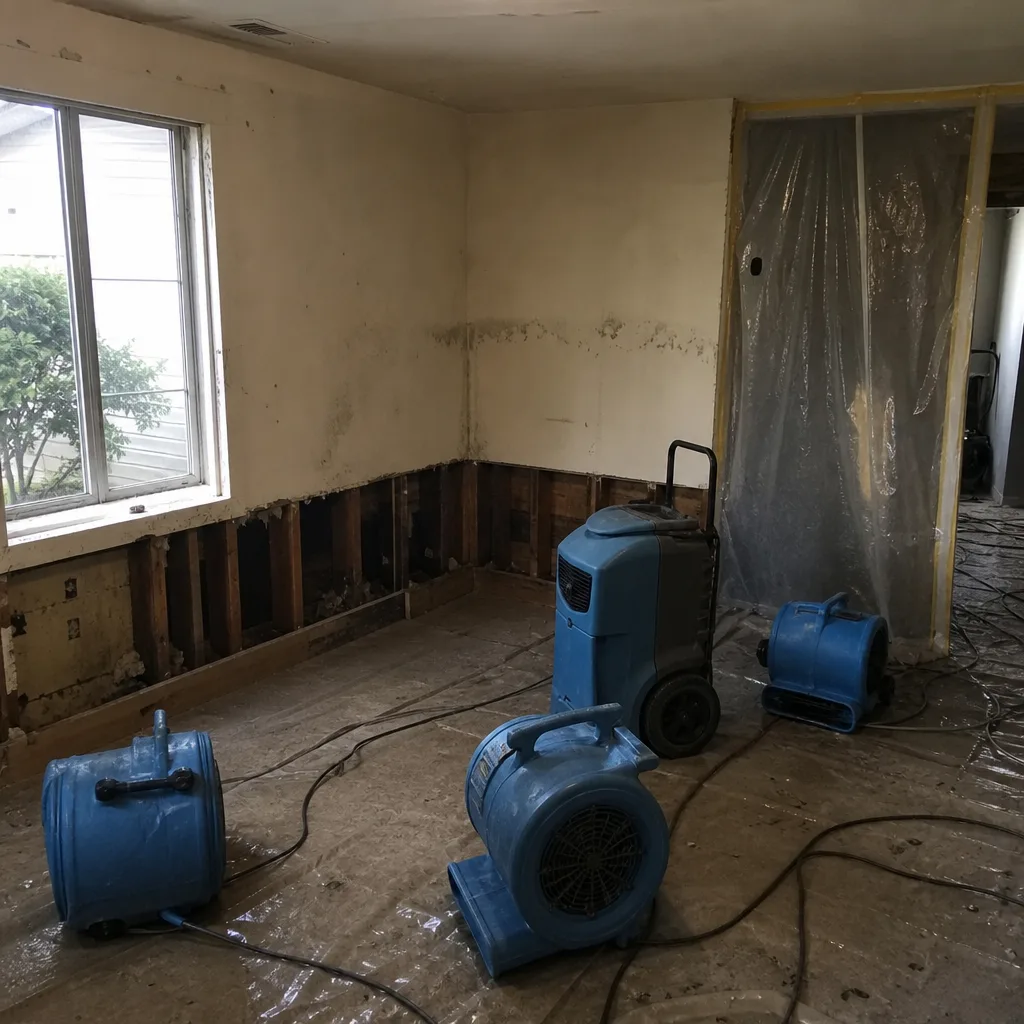 Before
 After
After Before
 After
After