
Last updated October 16, 2026
 Water damage drying
 Fire & smoke cleanup
 Mold remediation
 Storm response
 Sewage cleanup
 Reconstruction
Free visual inspection and a written scope of work before any mitigation begins - photos, moisture readings, and drying logs go in your claim file
The scope we write is the scope we bill. Anything new gets shown to you, in writing, before we touch it.
Get your free estimateSeasonal Damage Restoration Care for Austin: Year-Round Homeowner’s Guide
Austin averages 27 freezing days per year, which means most homeowners never winterize their pipes until a once-a-decade event like February 2021 hits and the city’s under-insulated homes fail all at once. This guide maps the actual Austin damage calendar: two high-risk windows (winter freeze events and late-spring flash flooding) bookended by months of heat that quietly degrades the materials protecting you during those events. For a broader overview, see our Complete Guide to Damage Restoration in Austin. You’ll learn which specific pipe locations fail in Austin homes, how upstream rainfall in the Barton Creek watershed translates to your crawl space, and what to do in the 72 hours before a forecast freeze.
Quick Answer
Seasonal damage prevention in Austin means preparing for two distinct emergency windows: winter freeze events (typically late December through February) and spring flash floods (May through June), while using the hot months in between to address the residual moisture and material degradation that heat accelerates. Our Water Damage Restoration Maintenance Checklist for Austin Homeowners covers each season step by step. Homeowners who wrap vulnerable pipes in November, clear drainage before spring rains, and schedule a moisture check after any summer water event avoid roughly 80% of the restoration calls we see year-round.
Restoration work we handle
Table of Contents
- The Austin Damage Calendar: Two Windows, One Long Heat Soak
- February Freeze Events: What Fails and Why Austin Homes Are Different
- Late-Spring Flash Flooding: Barton Creek Watershed and Your Foundation
- Summer Heat: The Quiet Degrader of Pipes, Seals, and Dried-Out Materials
- The 72-Hour Freeze Protocol: Exact Steps for Austin Home Types
- Month-by-Month Austin Maintenance Checklist
- Common Mistakes to Avoid
- When to Call a Professional
- Frequently Asked Questions
- The Bottom Line
The Austin Damage Calendar: Two Windows, One Long Heat Soak
Most seasonal maintenance advice you’ll find online was written for a four-season climate. Austin doesn’t have four equal seasons. It has two acute damage windows, a long stretch of heat that makes everything worse, and a few transitional weeks in October and November where preventive work actually matters.
The two acute windows:
- Freeze events: Late December through late February. Historically, Austin gets one hard freeze every 8 to 12 years. The last major one, February 2021, damaged more than 100,000 homes across the Austin metro. Most failures happened in walls and attics where pipes were never insulated because nobody thought they’d ever freeze.
- Flash flood season: May through mid-June. Austin sits at the bottom of the Texas Hill Country. When storms drop 4 to 6 inches of rain upstream in the Barton Creek watershed, that water moves downhill fast. Homes near creek beds, on slab foundations with poor drainage, and older pier-and-beam houses with low clearance take the brunt.
The quiet degraders:
- Summer heat (July through September): Attic temperatures in Austin routinely hit 130°F to 145°F. Any residual moisture from a spring water event becomes active mold territory within 48 to 72 hours at those temperatures. Heat also dries out rubber seals, PVC cement joints, and roof flashing, so when the next storm hits, materials that should flex have become brittle.
- Spring transitional weeks (March through April): This is the window to fix drainage, inspect downspouts, and check foundation grading before the first heavy rains arrive. Homeowners who do this work in March avoid most of the May-June flood damage calls we get.
In our experience at Wendell Restoration Austin, the homeowners who have a plan for these two windows and the heat soak in between rarely call us in an emergency. They call us for a moisture check or a repair quote and move on with their lives. The ones who treat Austin like a generic mild-climate city are the ones who call at 3 a.m. during a freeze thaw.
February Freeze Events: What Fails and Why Austin Homes Are Different
Here’s what most national guides get wrong about Austin freezes: a steady Northern winter at 15°F is easier on pipes than Austin’s rapid temperature swings. When the temperature drops from 70°F to 28°F in 48 hours, the materials in your walls contract at different rates. Copper pipe, PVC joints, and the caulk around exterior penetrations all shrink. That’s when hairline fractures open up. Then the freeze hits, water expands inside those fractures, and the pipe splits.
Specific pipe locations that fail first in Austin homes:
- Exterior wall pipe runs: Sinks and showers on north-facing exterior walls. The cold side of the house. These pipes get zero ambient heat from the living space when the wall insulation is thin (common in homes built before 2000).
- Attic pipe runs: Austin homes frequently have supply lines running through unconditioned attics. If the attic is not sealed and insulated properly, those pipes see the ambient outdoor temperature. During February 2021, attic pipe bursts were the single most common failure we saw across Austin.
- Outdoor hose bibs and irrigation backflow preventers: These are exposed to the full force of the freeze. The backflow preventer on your irrigation system is an expensive replacement if it cracks, and many homeowners don’t even know where it is.
- Water heater closet lines on exterior garage walls: Garages are unheated. Pipes running along the garage’s exterior wall freeze faster than anything else in the house.
Why February and early March are the most dangerous: the freeze-thaw cycle. A pipe can freeze solid on a Tuesday night, stay frozen through Wednesday, and then when the temperature climbs back above 32°F on Thursday, the ice thaws and water pressure hits the split. That’s why we get a flood of calls 48 to 72 hours AFTER the freeze passes. The damage happened during the freeze, but the water release happens during the thaw.
One more Austin-specific factor: many homes built between 2000 and 2020 used PEX piping, which handles freeze expansion better than copper. But the fittings, not the pipe, are what fail. Brass and plastic compression fittings crack under repeated expansion. So even newer Austin homes are not immune.
Late-Spring Flash Flooding: Barton Creek Watershed and Your Foundation
Austin’s flash flood season is not random. It’s driven by weather patterns that stall over the Hill Country and dump rainfall upstream. When that water hits the Barton Creek watershed, it moves downhill toward the Colorado River. Homes in the floodplain are obvious risks. But the homes that get water damage most often are not in the floodplain. They’re on slab foundations with poor exterior drainage, or pier-and-beam homes with low crawl space clearance.
How upstream rain becomes your crawl space problem:
- Heavy rain falls in the Hill Country watershed, often 20 to 40 miles west of the city.
- Water channels into Barton Creek, Shoal Creek, and their tributaries, which rise fast.
- The water table under Austin lifts, often by 2 to 6 feet within 24 hours.
- Homes with crawl spaces see groundwater intrusion through floor vents, foundation cracks, and gaps around plumbing penetrations.
- Slab homes see water pooling around the foundation perimeter, which wicks up through the concrete at a rate of about 1 inch per day.
What to do in March and April, before flood season:
- Walk the perimeter of your home: check that soil is graded to slope away from the foundation at least 6 inches over the first 10 feet. Austin’s clay soil expands when wet, which pushes water toward the slab if grading is flat or negative.
- Clean gutters and downspouts: one clogged downspout puts the entire roof’s water load at a single foundation point. Extend downspouts at least 5 feet from the slab.
- Check your crawl space: look for standing water, moisture stains, or a dirt floor that feels damp. A vapor barrier on the crawl space floor is the single most cost-effective moisture defense for pier-and-beam homes in Austin.
- Test your sump pump if you have one: put 5 gallons of water in the pit and watch it cycle. Battery backup is wise, because Austin flood events usually coincide with power outages.
If you have a water event during flood season, drying the structure within 48 hours is critical. That timeline is shorter in May and June because outdoor temperatures are already in the 90s. Warm air holds more moisture, which means mold activates faster. Our Water Damage Restoration in Austin page goes into detail on what full structural drying looks like, including the psychrometric measurements we track.
Summer Heat: The Quiet Degrader of Pipes, Seals, and Dried-Out Materials
Austin’s July and August heat does not cause water damage by itself. What it does is worse: it sets up the conditions that make the next freeze or flood more damaging.
Here’s what 105°F attic temperatures do to a home:
- Accelerate mold spore activation: Any residual moisture from a spring water event, even a small one that dried on the surface, becomes active mold territory in attics and walls during summer. Mold spores that sit dormant at 80°F activate rapidly when the environment hits 100°F with even moderate humidity. We’ve pulled back drywall in August and found active growth from a February pipe leak the homeowner never noticed.
- Dry out rubber and PVC seals: The rubber gaskets on washing machine hoses, water heater connections, and outdoor faucets lose elasticity in sustained heat. A gasket that was fine in May is a brittle failure waiting for a December freeze or a November cold snap.
- Expand and contract expansion joints: Austin’s clay soil shrinks during summer drought, which causes foundation movement. That movement stresses the pipe connections running through the slab. The crack might not leak in August, but when the next freeze adds contraction stress, the connection fails.
- Degrade roof flashing and sealant: Austin gets intense UV exposure for 6 months straight. Caulk and sealant around vents, chimneys, and valley flashing breaks down faster here than in most of the country. By the time fall rain arrives, the sealant is cracked and water has a path in.
The practical takeaway: if you had any water event in the spring, even a small one, have the affected area moisture-checked during the summer. The heat means you cannot assume a surface-dry room is actually dry inside the wall. A professional moisture meter reading is the only way to know. This is also the window to replace aging washing machine hoses, check water heater connections, and reseal roof penetrations before fall.
Our team at Wendell Restoration Austin home sees this pattern every year: a homeowner who had a small leak in April, aired the room out, thought it was fine, and then in September finds mold behind the baseboard. The heat did the work. The leak just provided the moisture.
The 72-Hour Freeze Protocol: Exact Steps for Austin Home Types
When the National Weather Service forecasts a hard freeze for the Austin metro (meaning temperatures below 28°F for more than 4 hours), you have about 72 hours to prepare. Here’s the exact protocol, broken down by home type.
Step 1 (72 hours out): Locate your main shut-off valve. Every homeowner should know where this is before a freeze. Most Austin homes have the main valve at the meter near the street or in the front yard. Some have a secondary valve in the garage or a utility closet. Find it, test it, and make sure you can turn it with a wrench if needed. Take a photo of it so you’re not searching at midnight.
Step 2 (48 hours out): Wrap vulnerable pipes. Use foam pipe insulation sleeves, which cost about $2 per 6-foot section at any hardware store. Prioritize these locations: attic pipe runs, pipes on exterior walls, the water heater supply lines in the garage, and outdoor hose bibs. For hose bibs, add an insulated cover over the foam. In Austin’s 2021 freeze, the money spent on pipe insulation in November saved homeowners tens of thousands in February.
Step 3 (24 hours out): Drip protocol. The old advice to drip a faucet works, but only if you do it right. Drip the faucet farthest from the main line (usually the bathroom at the back of the house) with warm water mixed in. The drip should be a steady stream about the width of a pencil lead. Also open cabinet doors under sinks on exterior walls to let warm indoor air reach the pipes. Drip one faucet per floor, not every faucet in the house.
Step 4 (12 hours out): Drain outdoor lines. Shut off the irrigation system at the backflow preventer and drain any above-ground lines. Disconnect garden hoses. If you have a pool, run the pump continuously during the freeze, not on a timer.
Step 5 (During the freeze): Monitor pressure. If water pressure drops suddenly, you have a frozen pipe somewhere. Open the nearest faucet to relieve pressure. Do not use a torch or heat gun to thaw pipes, that causes steam expansion and can split the pipe.
Step 6 (After the thaw): Inspect. Once temperatures climb above 32°F for a few hours, turn water back on slowly and check every floor, wall, and ceiling for water signs. Look for bulging drywall, water stains, or the sound of running water with no fixture on.
For homeowners with pier-and-beam foundations (common in older neighborhoods like Hyde Park, Travis Heights, and parts of East Austin), add one extra step: check the crawl space for standing water or dripping pipes. Frozen pipes in crawl spaces thaw slower than wall pipes and often go unnoticed for days.
Month-by-Month Austin Maintenance Checklist
Here’s the full Austin calendar for damage prevention, built around the actual risk timeline:
January and February: Freeze Watch
- Monitor freeze forecasts and activate the 72-hour protocol when hard freeze is predicted.
- Keep cabinet doors open on exterior walls during any freeze warnings.
- Check attic pipes monthly for condensation or frost on fittings.
- After any freeze event, walk every room looking for water stains, soft drywall, or buckled flooring.
March and April: Drainage Prep
- Clean gutters and downspouts after oak pollen season (late March).
- Check foundation grading: soil should slope away from the slab 6 inches over 10 feet.
- Inspect crawl spaces for moisture, especially after spring rains begin.
- Test sump pumps and any drainage systems before the first big storm.
May and June: Flood Season Response
- Monitor rainfall in the Hill Country, not just Austin. Upstream rain is your flood warning.
- After any heavy rain event, check the crawl space and foundation perimeter within 24 hours.
- If water gets in, start drying within 48 hours. Warm May air means mold timeline is short.
- Document any water damage with photos for insurance purposes.
July through September: Heat Maintenance
- Replace washing machine hoses every 5 years, or sooner if rubber feels stiff.
- Check water heater connections and expansion tank for drips or corrosion.
- Reseal roof penetrations: vents, chimney flashing, pipe boots. Use a high-quality silicone caulk rated for high heat.
- If you had any spring water event, have the affected area moisture-metered now, not after a fall storm.
October and November: Freeze Prep
- Wrap pipes in the four critical locations: attic runs, exterior walls, garage lines, outdoor hose bibs.
- Drain and winterize the irrigation system before the first hard freeze threat.
- Locate and photograph your main water shut-off valve.
- Seal any gaps where pipes enter the house from outside. A $6 tube of expanding foam is cheap insurance.
December: Holiday Watch
- If you’re traveling for the holidays, shut off the main water valve and drain the lines, or at minimum set the thermostat no lower than 60°F.
- Ask a neighbor to check the house during any freeze warnings.
- Keep the drip protocol instructions posted somewhere you’ll find them at midnight.
This checklist is not a full home maintenance plan. It’s specifically the items that prevent water damage in Austin’s climate. Our Water Damage Repair in Austin page has additional guidance on what to do when damage has already happened.
What It Costs: Austin-Specific Restoration Price Ranges
Homeowners in Austin routinely ask us what different restoration jobs cost, and too many companies refuse to say before sending a technician out. Our Damage Restoration Cost Breakdown: The Austin Homeowner’s Reference for 2026 explains how we price these jobs. Here are real ranges we see in Austin, as of 2025, so you have a ballpark before you ever tap “call.”
- Pipe burst mitigation and dry-out: $1,800 to $4,500 for a single room. Includes water extraction, baseboard removal, dehumidification, and antimicrobial treatment under IICRC protocol. Attic pipe bursts in Austin homes typically run toward the higher end because access is harder.
- Full crawl space water removal and drying: $2,000 to $5,000 depending on square footage and accessibility. Pier-and-beam homes in central Austin with low clearance require more labor and equipment.
- Mold remediation after a spring leak: $1,500 to $6,000 for a contained area. Larger spaces with active HVAC contamination push higher. The Austin heat drives mold faster than most markets, so remediation often includes full containment and HEPA air scrubbing.
- Flood restoration after a May storm: $3,500 to $12,000 for a ground-floor flood event. Depends on water category (clean vs. contaminated), how long water sat, and whether structural drying is possible before demo.
- Emergency response and board-up: $500 to $1,500 for the initial stabilization. Includes tarping, water stopping, and initial extraction.
Every one of those jobs comes with a written price before any work starts at Wendell Restoration Austin. That’s a rule, not a courtesy. You’ll know the number on the screen before a single tool is touched, and the digital invoice is texted to you with a payment link.
Common Mistakes to Avoid
- Treating Austin like a mild-climate city. Homeowners who skip winterization because “Austin doesn’t get cold” are the ones who filed 2021 freeze damage claims. Prepare like a hard freeze is coming every year, because eventually it will.
- Waiting until after a storm to find your shut-off valve. The valve is not something you want to locate for the first time during an active water leak. Find it, photograph it, and practice turning it before the season starts.
- Drying walls with fans only. A household fan moves air but does not remove moisture. Without a dehumidifier pulling moisture out of the structure, the water just moves deeper into the drywall and studs. That’s how mold starts behind walls in Austin’s summer heat.
- Assuming a small leak is no big deal. A pinhole leak in a wall or crawl space can go unnoticed for weeks. During Austin summers, that’s enough time for mold colony formation. If you see a water stain, investigate now, not next month.
- Using the wrong caulk for roof penetrations. The sun in Austin destroys ordinary caulk within one season. Use a high-quality silicone or polyurethane sealant rated for high-heat UV exposure. Cheap acrylic latex caulk cracks within months.
- Ignoring crawl space moisture in spring. Many Austin homes have chronically damp crawl spaces. Monthly or quarterly checks in spring and after heavy rain are essential. A vapor barrier installed in a crawl space is one of the best dollar-for-dollar damage prevention investments in this city.
- Letting insurance conversations wait until after damage. Know what your policy covers before a loss happens. Standard homeowner policies in Texas typically cover sudden and accidental water damage, including pipe bursts, but flood damage from rising water often requires a separate policy. Check with your agent in March, not in May.
When to Call a Professional
Some jobs are DIY, some are not. Call a professional when: you see visible mold growth covering more than 10 square feet; water has been sitting in a crawl space or on a slab for more than 48 hours; you smell a persistent musty odor after a water event; you see water staining on ceilings that suggests structural saturation; or you’re dealing with Category 3 water (sewage, flood water) which requires full protective equipment and disposal protocols. DIY attempts on these usually make the damage worse and cost more to fix.
Wendell Restoration Austin offers free estimates in Austin. Call (325) 237-2088 and we’ll send a technician with a live arrival time you can track. You get a written price before any work starts. We run every job under Mold Remediation in Austin protocols using IICRC standards and professional drying equipment from Dri-Eaz, Phoenix, and Injectidry, so you know the job is done to the same standard used on commercial loss sites.
Frequently Asked Questions
Water damage restoration in Austin typically ranges from $1,800 to $12,000 depending on the scope: a single-room pipe burst dry-out runs $1,800 to $4,500, while a full flood restoration after a storm runs $3,500 to $12,000. Mold remediation adds $1,500 to $6,000 depending on the affected area and containment needs. Call (325) 237-2088 for an exact quote, estimates are free and the price is put in writing before any work starts.
We answer calls live 24/7, which means you’re not leaving a message or waiting on a callback queue. After you call (325) 237-2088, a background-checked, uniformed technician is dispatched with a live arrival time you can track, not a vague four-hour window. The goal is to get water stops in place before the damage spreads.
Most standard Texas homeowner policies cover sudden and accidental water damage, including pipe bursts from freeze events, but flood damage from rising water typically requires a separate flood policy. We document everything with before-and-after photos and work directly with your adjuster, which means less back-and-forth for you. Call (325) 237-2088 and our team will help you understand your coverage before we start any work.
It depends on the square footage and whether the moisture source is resolved, but Austin’s summer heat means professional standards apply: any visible mold over 10 square feet, any water event older than 48 hours, or any persistent musty odor after drying should get full IICRC protocol remediation, not a surface cleaning. Surface cleaning alone leaves roots in porous materials that regrow in the heat. Call (325) 237-2088 for a free assessment and a written scope before work starts.
Drip the faucet farthest from the main line with warm water mixed in, run a steady stream about the width of a pencil lead, open cabinet doors under exterior-wall sinks, and drip one faucet per floor, not every faucet in the house. Wrap vulnerable pipes at least 48 hours before the freeze hits, especially attic runs and exterior wall lines. That’s the short version: the full 72-hour protocol is in this guide above.
If you smell a musty odor in your living space, see condensation on floor joists or insulation, or notice standing water or damp dirt in the crawl space after rain, you have an active moisture problem that will become a mold problem in Austin heat. The fix is a vapor barrier on the crawl space floor, improved drainage around the foundation, and a professional moisture assessment if the problem has already started. Call (325) 237-2088 for a free crawl space inspection.
The Bottom Line
Austin is not a four-season city. It’s a two-window city: freeze events in winter, flash floods in spring, and a long hot stretch that turns small problems into big ones. The homeowners who stay ahead of damage are the ones who wrap pipes in November, check drainage in March, monitor crawl space moisture after every heavy rain, and moisture-meter any spring water event before summer heat accelerates it. The ones who don’t are the ones who call us in emergencies. We’re always here when that happens, call (325) 237-2088 and you’ll get a live person, a written price before any work starts, and photo updates by text throughout the job. But we’d rather see you before the emergency, not after it.
Written by Blake Sorensen, Owner at Wendell Restoration Austin, serving Austin since 2006.
See the difference
 Before
 After
After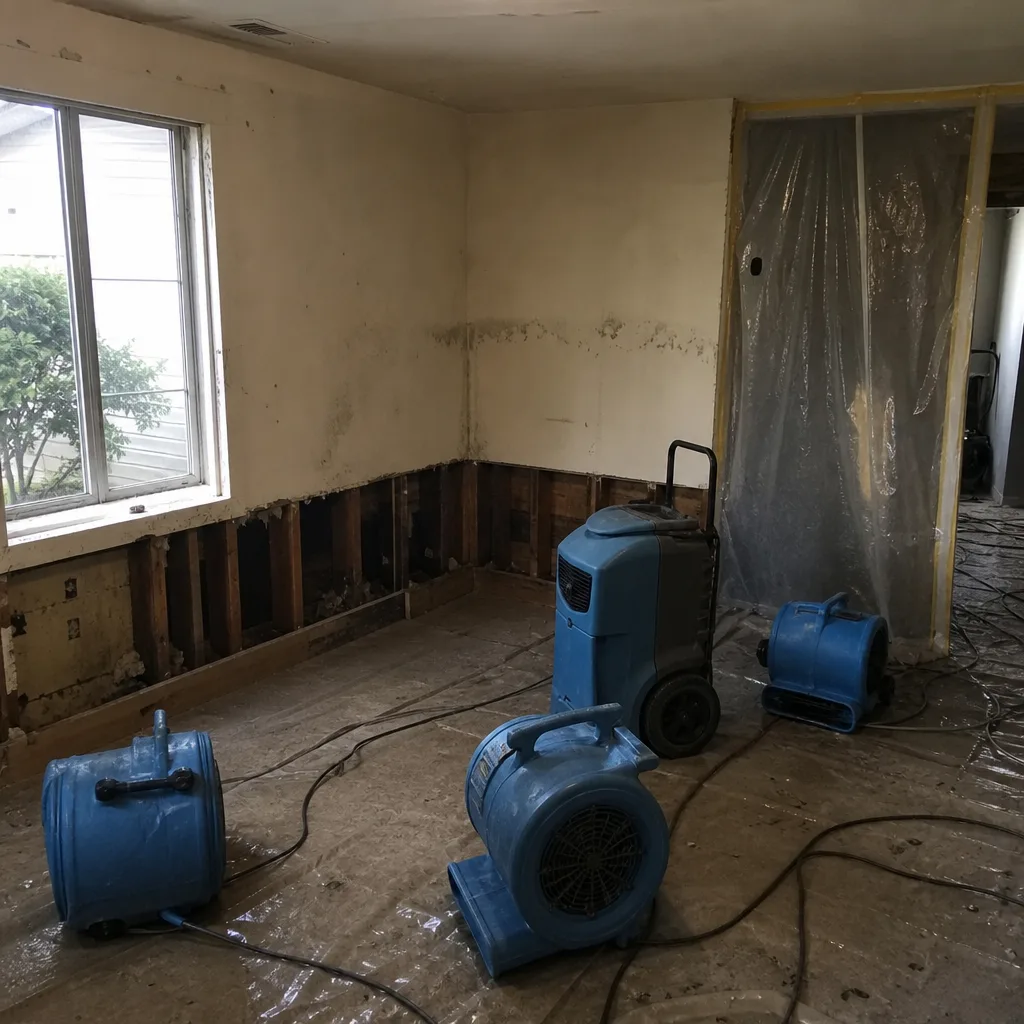 Before
 After
After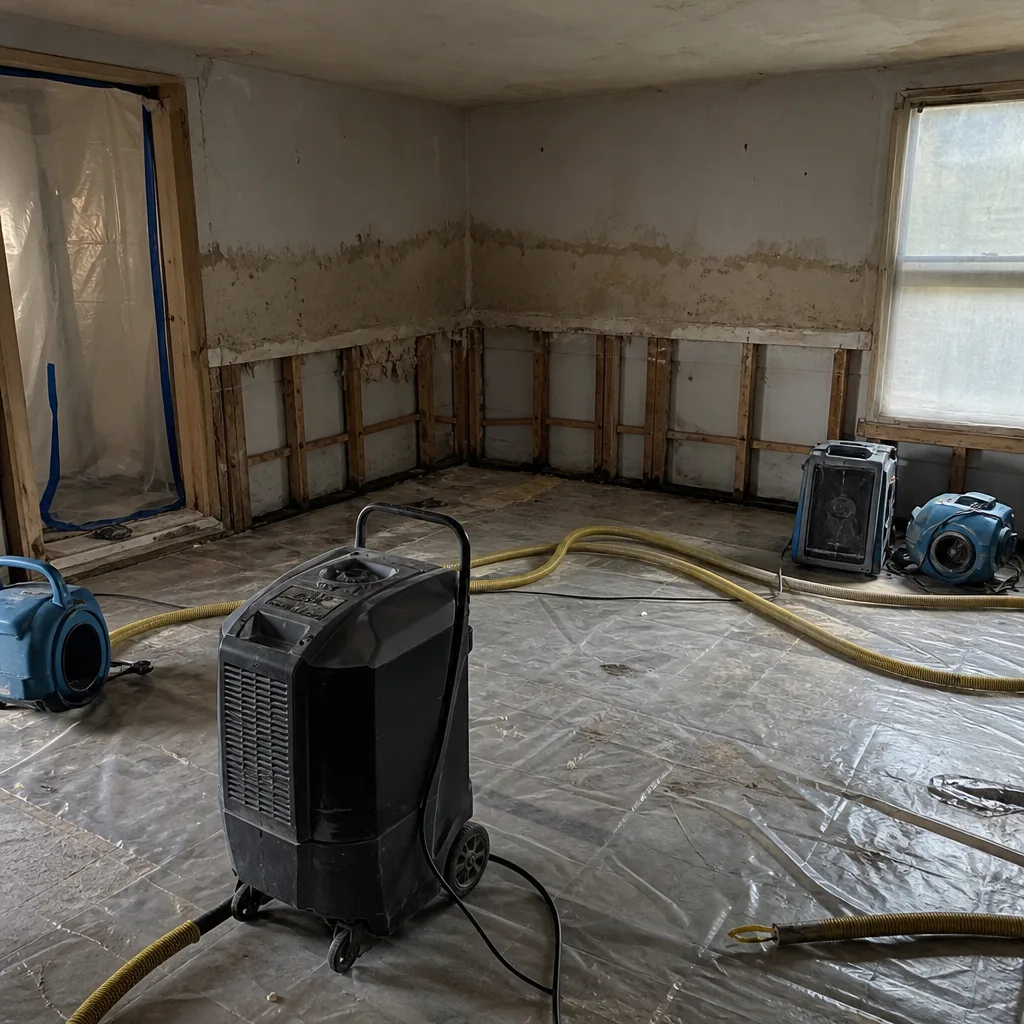 Before
 After
After