
Last updated October 16, 2026
 Water damage drying
 Fire & smoke cleanup
 Mold remediation
 Storm response
 Sewage cleanup
 Reconstruction
Free visual inspection and a written scope of work before any mitigation begins - photos, moisture readings, and drying logs go in your claim file
The scope we write is the scope we bill. Anything new gets shown to you, in writing, before we touch it.
Get your free estimateDamage Restoration Warning Signs: A Austin Homeowner’s Reference Guide
Here’s a number that should stop you cold: by the time you see mold on drywall, the colony behind that wall has typically been growing for two to three weeks. Visible mold is a late-stage symptom, not an early warning. The real skill, the one that separates a $600 drying job from a $14,000 gut-and-rebuild in Austin, is reading the signals your house sends before the drywall stains. This guide teaches you exactly that: the early sensory cues, the cheap tests you can run without tools, and a triage system for knowing when to act fast versus when you have a few days. For more guides & resources, see our blog.
Quick Answer
Early water damage in an Austin home shows up first as a specific type of musty or earthy odor, paint that starts to bubble or separate at drywall seams, baseboards pulling away from walls, or a water meter that moves when everything is off. None of these require visible standing water or staining. If you catch these signals in the first week, remediation is often a drying-and-antimicrobial job rather than a full Water Damage Repair in Austin rebuild.
Restoration work we handle
Table of Contents
- Sensory Signals Ranked by Reliability: What Actually Indicates Water
- Reading Paint, Drywall Tape, and Baseboards as Moisture Evidence
- Austin Foundation Signals: Normal Seasonal Movement vs. Plumbing Leaks
- The 30-Minute Water Meter Test: Finding Hidden Leaks Without Tools
- When to Call Within 24 Hours vs. Schedule This Week: A Triage Matrix
- What Your HVAC System Is Telling You About Moisture
- False Positives: Signs That Usually Are NOT Water Damage
- Common Mistakes to Avoid
- When to Call a Professional
- Frequently Asked Questions
Sensory Signals Ranked by Reliability: What Actually Indicates Water
Your nose is your first and most reliable water damage detector, but only if you know what you’re smelling. In our experience across Austin, the single most common early warning is a smell homeowners dismiss as “old house smell” or “that musty closet.” That odor is almost always microbial volatile organic compounds (mVOCs), the off-gassing of mold colonies that have been growing for at least 48 to 72 hours. Mold begins metabolic activity within two days of a moisture event, and it emits gases that smell earthy, damp, or like wet cardboard.
Here’s how sensory signals rank in terms of reliability as true water damage indicators:
- Musty or earthy odor in a specific room (high reliability): When the smell is localized to one area, that’s mVOC off-gassing from an active colony. The moisture source is still feeding it. This is not a false positive.
- Dripping sound inside a wall (high reliability): Water inside a wall cavity makes a distinct sound: soft, rhythmic, often only audible at night when the house is quiet. If you hear it, there is active water flow, and it is not evaporating fast enough to self-resolve.
- Increased indoor allergy symptoms in one room (moderate reliability): Mold spores concentrate in the air of the affected room. If your sinuses flare up in one bedroom but not the hallway, that’s a signal worth investigating.
- Sudden humidity spike indoors (moderate reliability): Austin’s outdoor humidity runs high from May through September, but if your indoor relative humidity climbs above 60% when the AC is running, excess moisture is entering or being trapped somewhere.
- “Wet dog” smell after rain (low to moderate reliability): This can indicate a roof or window leak, but it can also be a crawl space odor getting pulled into the living space by negative air pressure. Check the crawl space first.
One note about the nose test: smell fatigue is real. Your brain tunes out constant odors within roughly 20 minutes. The best time to detect a water damage smell is when you walk in from outside after being away for an hour or more. That first inhale is your most honest reading.
Reading Paint, Drywall Tape, and Baseboards as Moisture Evidence
Long before drywall turns brown or soft, it sends a series of visual signals that most guides gloss over. These are the signs we look for when a Austin homeowner calls us forWater Damage Restoration in Austin and we walk the property. Each signal tells a different story about where water is coming from and how long it has been moving through the wall assembly.
Paint Bubbling: The Most Misunderstood Signal
Paint bubbles form when water vapor, not liquid water, gets trapped between the paint film and the drywall paper. This means the moisture source is on the other side of the drywall, inside the wall cavity, and it is evaporating through the gypsum core. A single bubble the size of a quarter is worth investigating. A cluster of bubbles across a stud line usually means a supply line leak inside the wall.
Here’s a simple visual key for interpreting what you see:
- Bubbles in a vertical line: Water is running down a pipe or a stud. Think supply line leak above, draining downward.
- Bubbles in a horizontal band at the same height: This is a water line, most likely from a leak behind an appliance or a wicking effect from floor-level water.
- Paint is lifting in sheets but feels dry: Old water damage that has dried, or a humidity problem. Check with a moisture meter before assuming it’s active.
- Paint is peeling with visible water droplets behind it: Active leak. Call within 24 hours.
Drywall Tape Separation: The Structural Tell
Drywall tape is paper, and paper expands when it gets wet. When the tape starts to separate from the seam, the wall has absorbed enough moisture to change the dimensions of the paper tape. This is a mid-stage signal, but still before visible staining in many cases. Pay particular attention to tape separation at wall-to-ceiling joints in rooms below bathrooms or the kitchen, because that is where supply line and drain line leaks show themselves first.
Baseboard Gaps: The Floor-Level Clue
When baseboards pull away from the wall, homeowners often attribute it to house settling. Sometimes that’s accurate, but in Austin, there’s another explanation that gets missed: moisture wicking up from a slab leak or a crawl space moisture problem. Water rises through porous materials by capillary action, and the first thing it moves through at the base of a wall is the bottom plate and the baseboard. If the gap is wider at the bottom than the top, or if the baseboard feels spongy when you press it, that’s moisture, not settling.
Austin Foundation Signals: Normal Seasonal Movement vs. Plumbing Leaks
Austin sits on multiple soil types, but a huge portion of the city is built on expansive clay, especially east of I-35 and across the Blackland Prairie. Expansive clay swells when wet and shrinks when dry, and it moves with the seasons. This creates a specific problem for leak detection: your house already moves on its own, so how do you know if the movement is normal or caused by a slow plumbing leak under the slab?
The Seasonal Pattern to Expect
In a normal year, Austin clay soil is driest in August and September after months of intense heat and no rain. This is when you will see hairline cracks in drywall, doors that stick, and small gaps at window trim. The soil has shrunk, and the foundation has settled slightly. Then, when fall rains return, the soil swells, and most of those cracks close back up. This seasonal cycle is normal and not a water damage issue. For a full breakdown of what to expect each season, see our Seasonal Damage Restoration Care for Austin: Year-Round Homeowner’s Guide.
The Pattern That Signals a Leak
A slow plumbing leak creates the opposite pattern. Instead of movement tied to the seasons, you get localized movement that never stops. The soil under one corner of the slab stays saturated year-round while the rest of the soil goes through its normal wet-dry cycle. Here’s what that looks like from inside the house:
- Cracks that keep widening in the same area, season after season, while the rest of the house stabilizes.
- One section of floor that feels cooler than the surrounding floor in summer, when the slab should be uniformly warm. Moving water conducts heat away from that area.
- Doors in one hallway that stick in January when the rest of the house is moving normally. That’s sustained moisture keeping one section of the slab elevated.
- A persistent low spot in the floor that doesn’t change with the seasons. The subfloor or slab has been compromised by long-term water exposure.
If you have a pier-and-beam home in older Austin neighborhoods like Hyde Park or Travis Heights, the signal set is slightly different. Look for piers that are out of level, crawl space soil that stays visibly damp in the middle of a dry August, or vapor barrier that has water pooled on top of it. A slow plumbing leak under a pier-and-beam house runs into the crawl space, and it can go unnoticed for years because it evaporates before it pools visibly.
The 30-Minute Water Meter Test: Finding Hidden Leaks Without Tools
This is the single most useful test a homeowner can run, and it costs you nothing. Your water meter is a precision instrument that measures flow through your main supply line. If water is moving when everything in the house is off, you have a leak somewhere between the meter and your fixtures, or inside a wall. Here is the step-by-step:
- Turn off everything that uses water. This means faucets, washing machine, dishwasher, ice maker, irrigation system, water softener, and any automatic fill valves. If you have a pool with an auto-fill, shut that valve off too.
- Find your water meter. In most Austin homes, it’s in a concrete or plastic box near the street, close to the property line. The lid may say “WATER.”
- Lift the lid and note the position of the low-flow dial. This is the small dial or triangle that spins with even tiny amounts of water flow. On digital meters, write down the exact reading.
- Wait 30 minutes. Do not use water during this period. No toilet flushes, no hand washing, no running a glass from the tap.
- Check the dial again. If the low-flow dial has moved or the digital reading has changed, water is flowing somewhere inside the house when it should not be.
- To isolate the source, shut off the water supply at the house. If the meter keeps moving with the house supply off, the leak is in the buried line between the meter and the house. If it stops, the leak is inside the house, and the next step is shutting off individual fixture valves to narrow it down.
A slow leak can move as little as half a gallon per hour, which is a tiny movement on the dial. Look very closely. Even a quarter-gallon-per-hour leak adds up to 180 gallons per month, and in a wall cavity, that’s more than enough to establish a mold colony and rot out a bottom plate.
When to Call Within 24 Hours vs. Schedule This Week: A Triage Matrix
Here’s the framework we use when a Austin homeowner calls and describes symptoms over the phone. It’s built around the IICRC water damage categories: Category 1 is clean water, Category 2 is significantly contaminated (gray water), and Category 3 is grossly contaminated (sewage or floodwater). Your response window should shrink as the category goes up.
- Call within 24 hours (Category 1, active flow): You hear dripping inside a wall, the water meter test confirms active flow, or paint bubbles have visible moisture behind them. The water source is still feeding the problem. Every additional 24 hours roughly doubles the area of affected material.
- Call within 24 hours (Category 2 or 3): Washing machine overflow, dishwasher leak that ran overnight, toilet overflow, or any water that touched the ground outside and came in. Gray and black water carry bacteria and require antimicrobial treatment, not just drying. This is not a wait-and-see situation.
- Schedule this week (Category 1, contained): A small leak under a sink that has been fixed, a roof leak that has stopped, or a musty smell in one room with no visible staining and no active flow. The moisture is no longer being fed, but the affected material needs to be dried properly and checked for mold. A few days of delay is usually manageable if the area is small.
- Monitor and document: Seasonal cracks that open and close predictably, baseboard gaps that don’t change over a month, or a smell that comes and goes with the weather. These may be normal Austin house behavior. Take photos monthly and compare.
The dividing line is simple: active water flow or contaminated water means act now. Stagnant, contained moisture means act this week. Either way, the cost goes down the earlier it’s addressed. A half-day drying job with three air movers and a dehumidifier runs a few hundred dollars in Austin. A wall cavity that’s been wet for three weeks gets you into $4,000 to $8,000 territory for drywall removal, framing treatment, and rebuild.
What Your HVAC System Is Telling You About Moisture
Your air conditioning system is a dehumidifier as well as a cooler, and its behavior can reveal moisture problems you can’t see. In Austin’s climate, the AC runs long hours from May through October, and anything abnormal in its performance is worth a second look.
- Short cycling: The AC turns on and shuts off every few minutes instead of running for longer cycles. This can mean the system is oversized, but it can also mean the thermostat is reading moisture-saturated air in one part of the house and responding erratically.
- Condensation on supply registers or ductwork: Water beading on metal registers indicates the ductwork is pulling humid air from an unconditioned space, often a crawl space or attic that has a moisture problem. In Austin, this is more common in pier-and-beam homes where ductwork runs through the crawl space.
- Persistent condensation on windows in summer: If your single-pane windows are sweating in July, the indoor humidity is too high and the AC is not keeping up. The moisture has to come from somewhere: a crawl space, a slab leak evaporating into the air, or a ventilation problem.
- Mold growth around supply vents: This is a sign that the air being pushed into the room is carrying enough moisture and spores to support growth on the vent itself. The mold is in the ductwork or in the space around it.
Modern restoration drying uses psychrometric data (measuring the air’s temperature, humidity, and dew point) to determine when a structure is actually dry, not just surface-dry. The same principle applies to your HVAC system: if the air its moving is wetter than it should be, that moisture is coming from a source the AC can’t remove. We run the same Dri-Eaz and Phoenix equipment on Austin water damage jobs that commercial restoration companies use on large-loss sites, and the reason is simple: the machines do not guess, they measure. If you’re evaluating providers, our How to Hire a Damage Restoration Contractor in Austin: A Step-by-Step Guide can help.
False Positives: Signs That Usually Are NOT Water Damage
We get a lot of calls for things that turn out to be normal Austin house behavior. Here are the most common false alarms, and how to tell them apart from the real thing.
- Cracks at drywall corners where walls meet ceilings: These are almost always thermal expansion and contraction, not water. Austin’s temperature swings plus the natural settling of a wood-framed house create these cracks in every home eventually. If the crack is hairline and not growing, it’s cosmetic.
- Efflorescence on concrete or brick: That white powdery residue is mineral salts left behind when water evaporates from masonry. It can look alarming, but it’s evidence of a past moisture event, not an active one. If it keeps reappearing after cleaning, then investigate.
- Peeling paint on exterior walls or window sills: Austin’s UV exposure and rain cycles cause exterior paint to fail regardless of water damage. Unless the peeling is accompanied by soft, spongy wood or visible rot, it’s usually just sun and weather.
- Condensation on toilet tanks in summer: Cold water inside the tank meets warm, humid Austin air outside, and water beads form. This is normal. Adding a tank liner solves it.
- High water bill with no visible leak: Check the irrigation system first. Underground sprinkler lines are the most common source of unexplained water usage in Austin, and they leak into the soil, not into your house. The water meter test can still confirm flow, but the fix is an irrigation repair, not restoration.
Knowing these false positives saves you money and worry. But if you’re not sure, a moisture meter reading takes minutes and tells you definitively whether a material is actively wet. We do this on everyMold Remediation in Austin assessment before recommending any work, because a written scope with confirmed moisture data is the only honest starting point.
Common Mistakes to Avoid
- Painting over water stains without addressing the moisture source. The stain will bleed through the new paint, and the mold behind the wall keeps growing. Kilz doesn’t kill mold; it just covers the evidence until the problem gets worse.
- Assuming a small leak stopped because the visible water dried up. Water moves through drywall and framing by capillary action. What you can see is a fraction of what got wet. The unseen moisture keeps wicking for days or weeks.
- Using a box fan to “dry out” a wet wall or floor. A box fan moves air, but it does not dehumidify. It can actually spread mold spores throughout the house while leaving the structure wet. Professional drying uses dehumidifiers that extract moisture from the air, not just circulate it.
- Waiting to call because “insurance probably won’t cover it.” Most Austin homeowners policies cover sudden and accidental water damage, and restoration companies work directly with adjusters. In our experience, homeowners who wait end up with a claim that’s harder to prove, because the adjuster sees weeks of neglect rather than a sudden failure. Photo documentation from day one makes the claim cleaner.
- Trusting a smell that “went away on its own.” The mVOCs didn’t stop because the mold died; they stopped because the moisture source cycled off briefly, or your nose adapted. The colony is still there. When the moisture returns, so does the smell.
- Ignoring baseboard gaps because “the house is just settling.” Austin houses do settle, but settle follows a seasonal pattern. Gaps that keep widening in one area, especially in a hallway or near a bathroom, are a plumbing signal more often than a soil signal.
- Running a dehumidifier for a week and calling it fixed. A consumer dehumidifier pulls maybe 30 to 50 pints a day; a professional restoration unit pulls 130 to 180 pints. If the wall cavity itself is wet, you’re dehumidifying the room while the wall keeps feeding moisture out of the framing. The cavity needs to be opened or chased dry with professional equipment.
When to Call a Professional
Call a restoration professional when the water meter test confirms active hidden flow, when you hear dripping inside a wall, when water has touched gray or black water sources, when paint bubbles contain visible moisture, or when a musty smell persists in one room for more than a few days. These are not DIY situations, and the cost of waiting always exceeds the cost of a same-week assessment. Wendell Restoration Austin home offers free estimates across Austin, and our 365-Day Done Right Promise means every repair is backed in writing for a full year. If it’s not done right, we make it right. Call (325) 237-2088 and you’ll talk to a live person, not a phone tree.
Frequently Asked Questions
Run a 30-minute water meter test with all fixtures off; if the meter moves, you have hidden flow. Then check for localized musty smells, paint bubbling, drywall tape separation, and baseboard gaps that are widening in one area. Any two of these signals together strongly suggest hidden moisture, and a moisture meter reading will confirm it in minutes.
Hidden water damage smells earthy, musty, or like wet cardboard, and the smell is usually strongest in one specific room or closet. This is the odor of mold mVOCs, and it means the colony has been growing for at least 48 to 72 hours. A whole-house musty smell that comes and goes with weather is more likely to be a crawl space humidity problem.
Water damage restoration in Austin typically runs $500 to $3,000 for a contained Category 1 drying job with professional equipment, $3,000 to $8,000 for water damage that requires drywall removal and rebuilding, and $10,000 to $25,000 or more for sewage backups or long-standing leaks that have compromised framing. The range is wide because the damage category and the size of the affected area drive the cost. Call (325) 237-2088 for an exact written quote.
Yes. Slow slab leaks, pinhole supply line leaks inside walls, and crawl space moisture that wicks up through the subfloor all produce water damage with no visible dripping water. These are the most expensive cases to fix because they go undetected for weeks or months, which is why the water meter test and sensory signals matter so much.
Most Austin homeowners policies cover sudden and accidental water damage, including hidden supply line leaks that were not caused by neglect. Long-standing leaks, slow seepage, and lack of maintenance are common denial reasons, so document with photos from the moment you notice a problem and contact your adjuster early. A restoration company that works directly with adjusters can submit photo evidence and moisture readings to support your claim.
Wendell Restoration Austin answers every call with a live person 24/7, and our technicians arrive with a live arrival time you can track. For active water flow or contaminated water, same-day dispatch is available across Austin, and the assessment includes a written scope of work and price before any tools touch the job.
The Bottom Line
The cheapest water damage is the water damage you catch in week one. That means paying attention to your nose, your water meter, and the subtle movement of baseboards, paint, and drywall tape before they become stains, soft floors, or visible mold. Austin’s climate and soil make some of these signals normal and some of them urgent, and the difference comes down to pattern: seasonal movement is predictable, while leak-driven movement keeps progressing in one area. Trust the water meter test as your zero-tool diagnostic. Trust your nose on the first inhale after leaving the house. And trust a written price before any work starts. If you’re not sure, a free assessment fromWater Damage Restoration in Austin costs you nothing, and waiting always costs you more than the call.
Written by Blake Sorensen, Owner at Wendell Restoration Austin, serving Austin since 2006.
See the difference
 Before
 After
After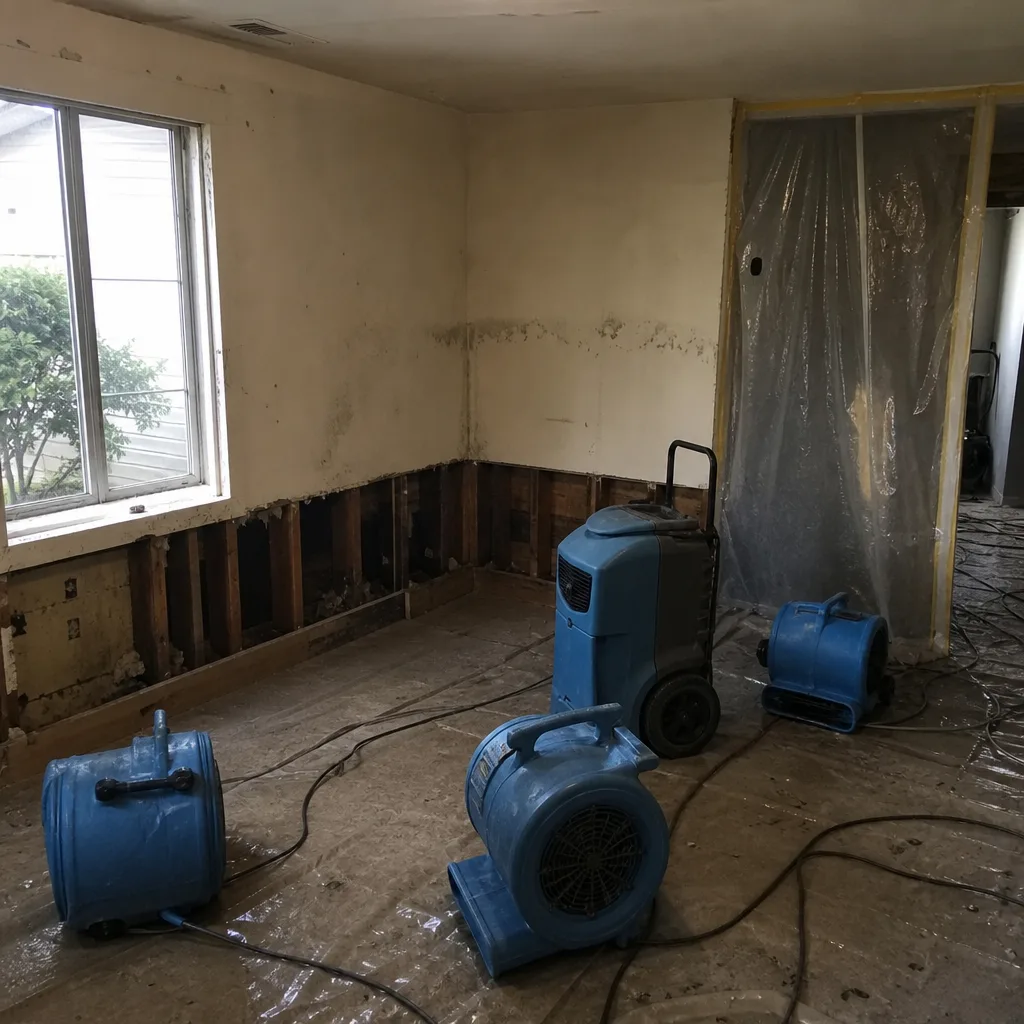 Before
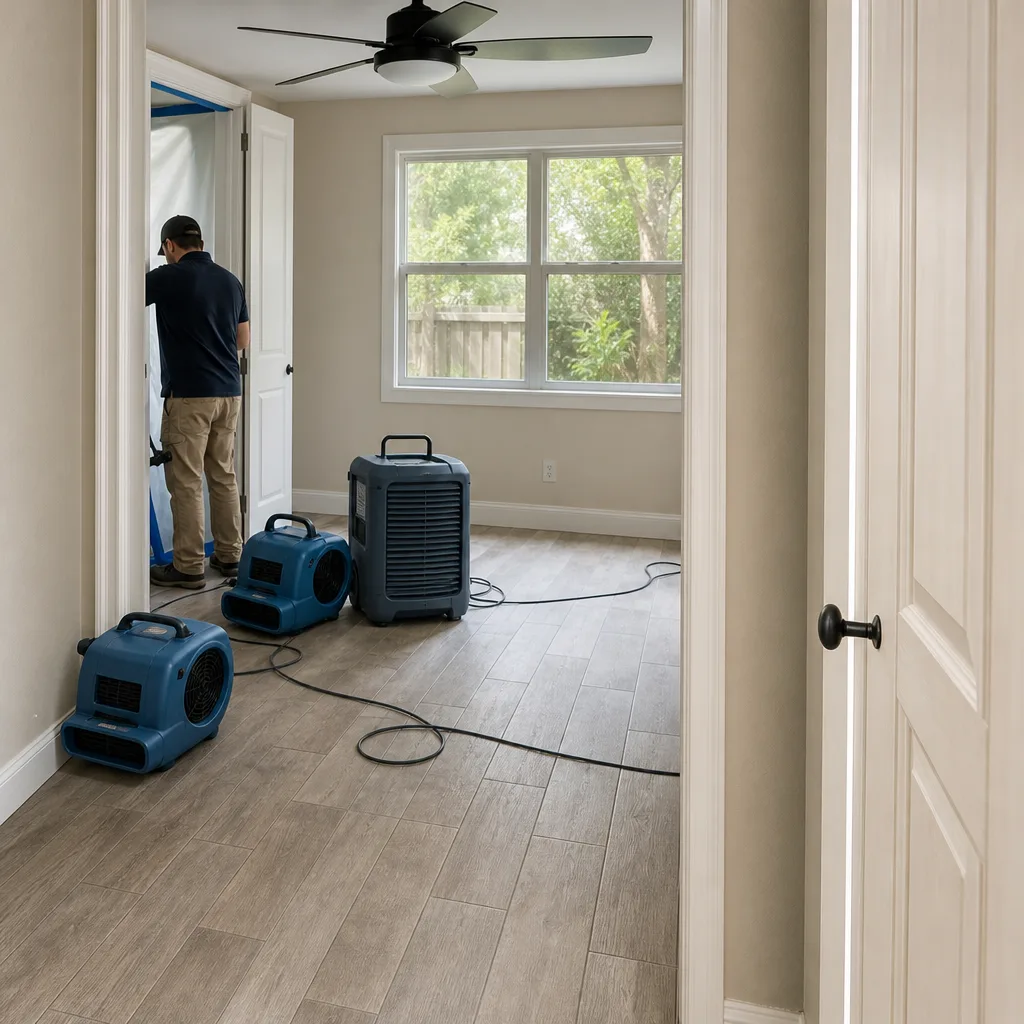 After
After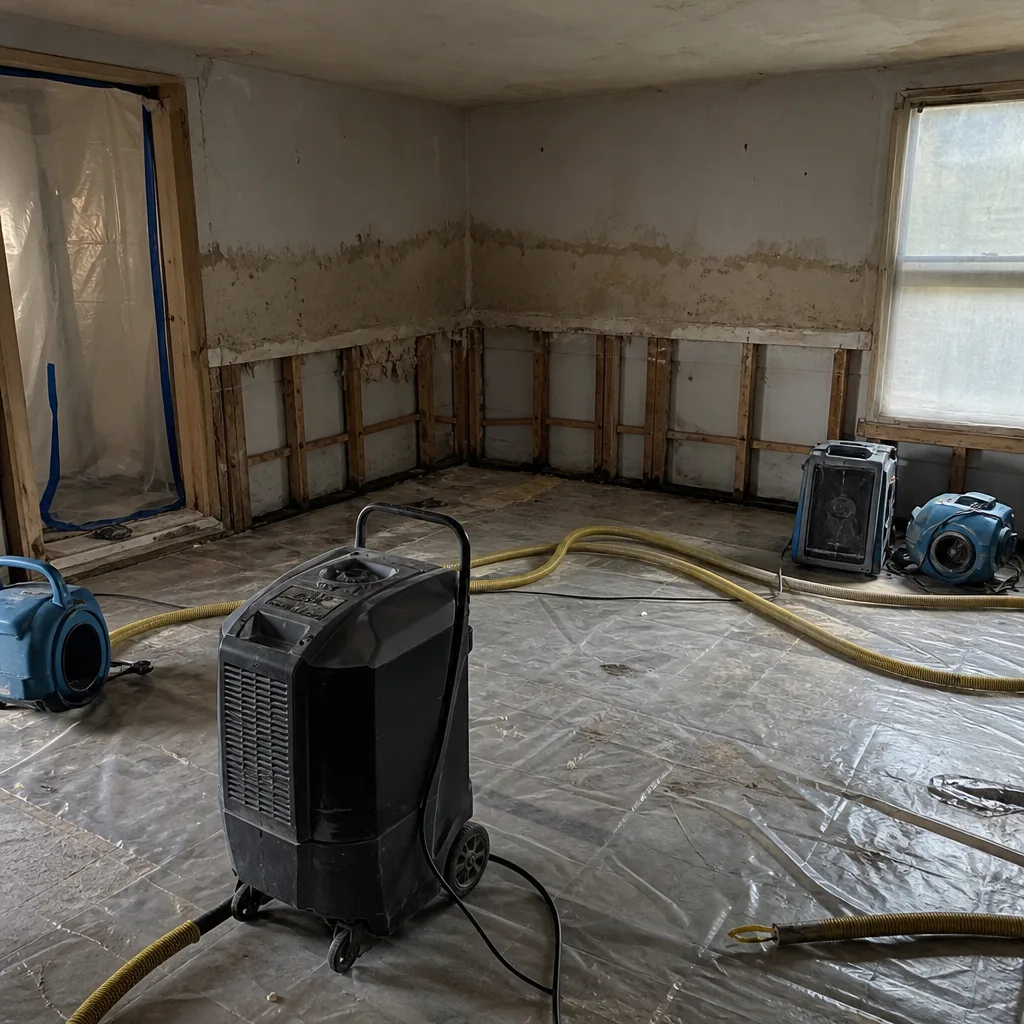 Before
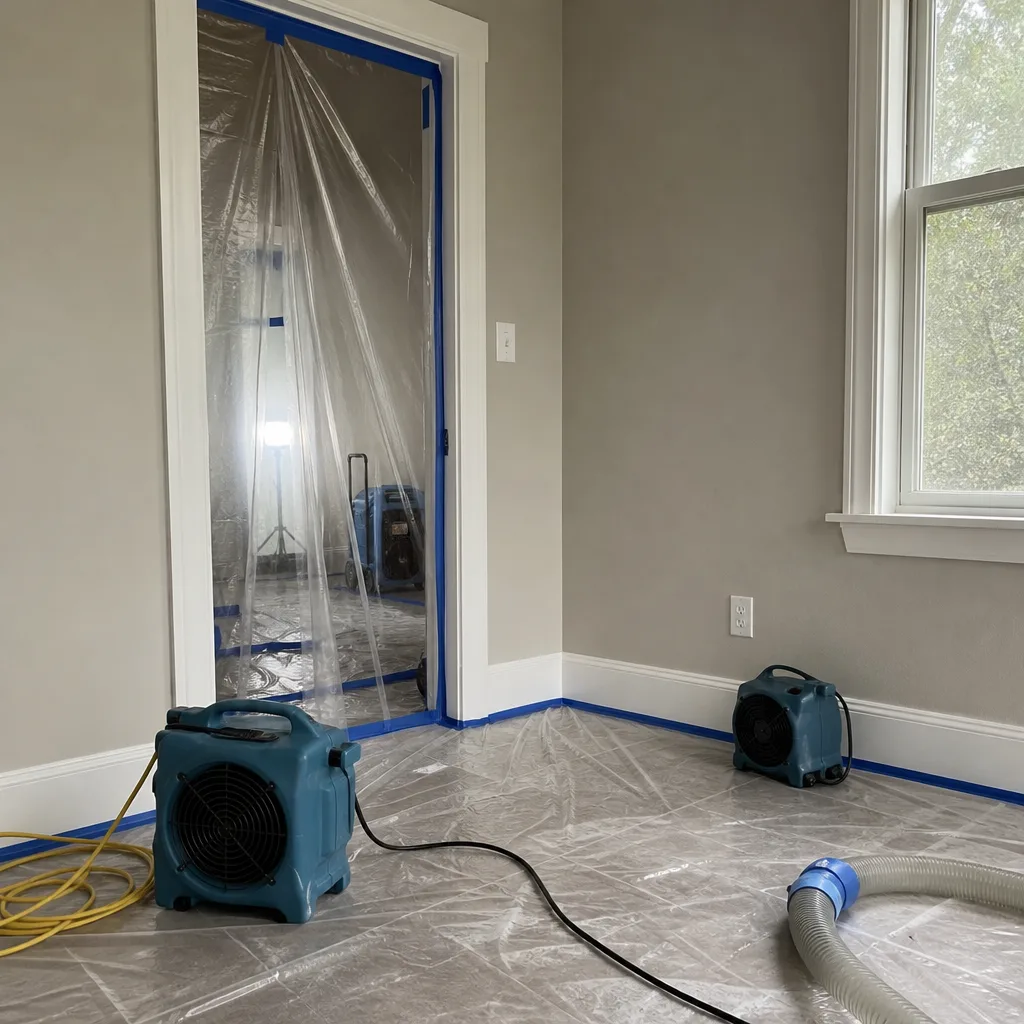 After
After