

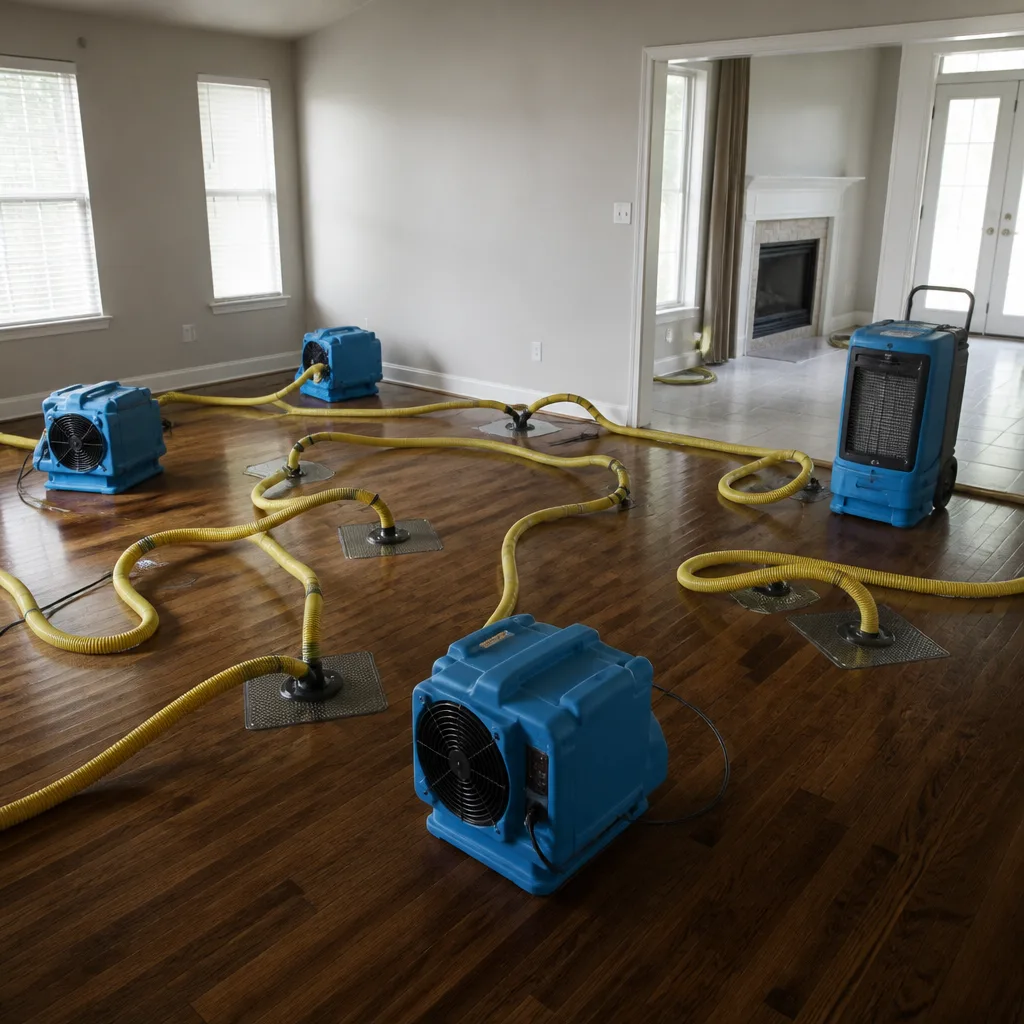
 Water damage drying
 Fire & smoke cleanup
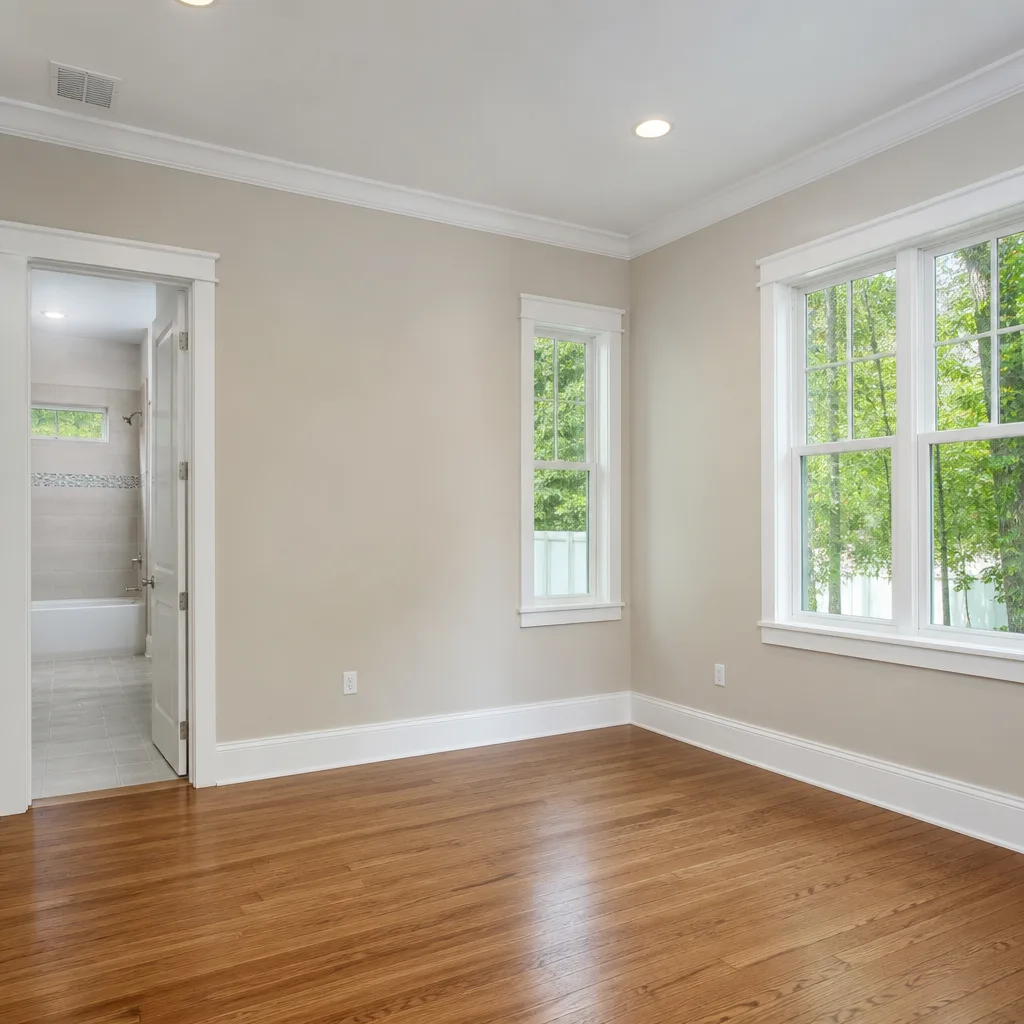 Mold remediation
 Storm response
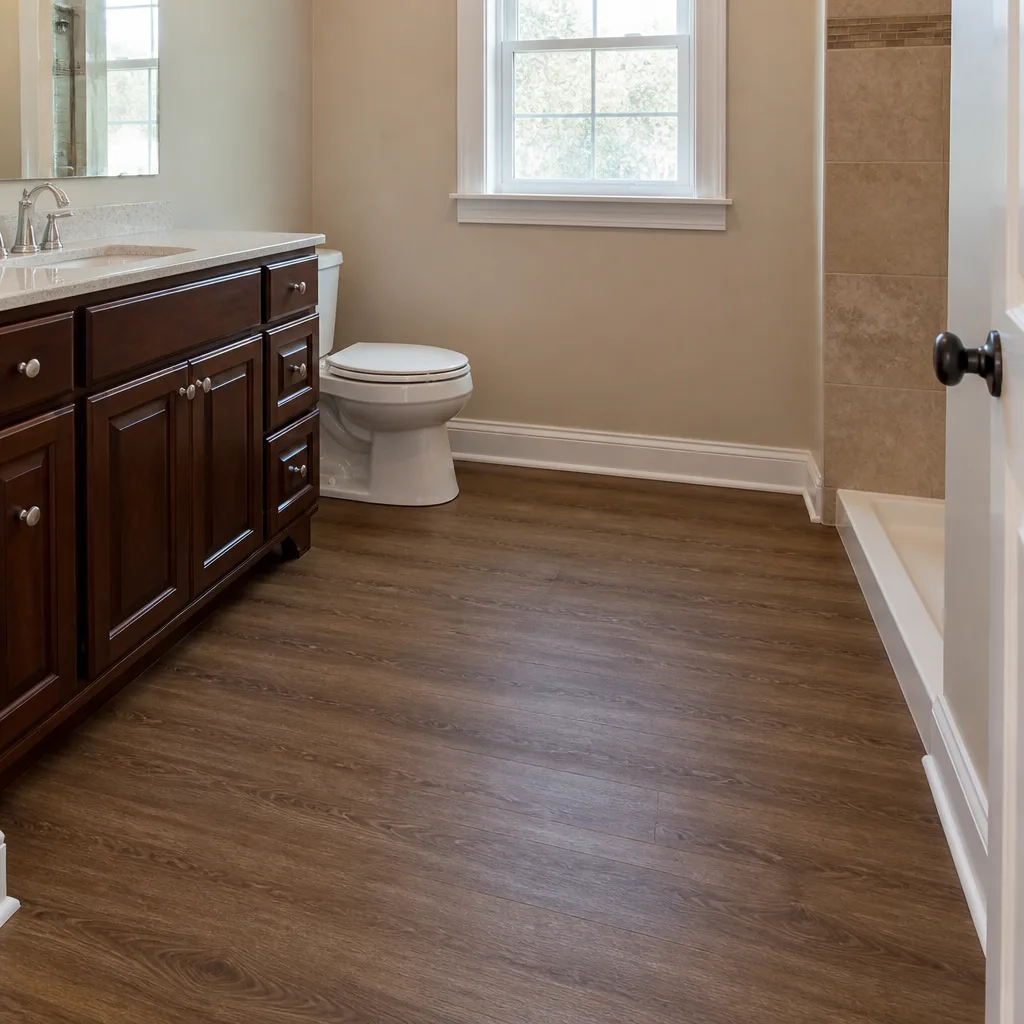 Sewage cleanup
 Reconstruction
Free visual inspection and a written scope of work before any mitigation begins - photos, moisture readings, and drying logs go in your claim file
The scope we write is the scope we bill. Anything new gets shown to you, in writing, before we touch it.
Get your free estimateFast, Reliable Water Damage Restoration Across Wells Branch
Water damage restoration in Wells Branch usually costs between $2,100 and $6,800 depending on how far the water traveled and what it soaked into. Most jobs in this part of town involve slab-on-grade homes built between the 1970s and 1990s, where water pools against brick veneer and wicks into drywall fast. We know the streets, the drainage patterns, and the specific ways water behaves in these homes. If you’re standing in a wet living room right now, call (325) 237-2088. A real person answers, and we’ll give you a live arrival time before you hang up.
Why Wendell Restoration Austin Is Wells Branch’s Preferred Water Damage Restoration Company
We’ve handled enough Wells Branch jobs to recognize the fingerprint of a MUD-related main break, a failed cast-iron drain, or a garage conversion that took on water during a gully washer. That local pattern recognition matters. It means we don’t show up and start guessing. We show up knowing what to look for under a slab, behind fiberboard siding, and along the slope of a driveway that drains toward Shoreline Drive.
Blake Sorensen leads our team, and the operating rules are simple: written price before any work starts, background-checked uniformed technicians, and before-and-after photos texted to you as the job progresses. Founded in 2006 and part of the Relay Home Co. family, Wendell Restoration Austin operates to The Relay Visibility Guarantee on every Wells Branch job. That means you always know who is coming, exactly when they’ll be there, and precisely what the work costs. No vague four-hour windows. No pricing surprises at the door.
We answer the phone 24/7 because water does not wait for business hours. When a water main breaks on your street at 2 a.m. and three garages are flooding simultaneously, you need someone who picks up on the first ring. That’s how we built our Water Damage Restoration in Wells Branch reputation, one answered call and one dry slab at a time.
Response Time to Wells Branch
We coordinate dispatch from our Austin office, but our crews move through Wells Branch regularly. In most cases, we can have a technician on-site within 60 to 90 minutes of your call. During a MUD main break that affects multiple homes, we stage crews in the neighborhood and work the block methodically rather than bouncing between addresses. You’ll get a live arrival time you can track, not a vague window.
The Written Price Guarantee
Before a single fan gets plugged in, you get a written scope of work with a line-item price. That number is the number you pay. No repair add-ons invented after the fact, no “we discovered more damage” phone calls that double your invoice. If the repair fails within 365 days, the 365-Day Done Right Promise means we come back and make it right, in writing, every single job. And if a repair fails after that first revisit, we return for a second visit free.
Restoration work we handle
Water Extraction in Wells Branch
Water extraction in Wells Branch typically runs $500 to $1,800 depending on the square footage affected and whether water has seeped into carpet padding, baseboards, or wall cavities. We use truck-mounted and portable extraction units to pull standing water out fast, then follow with psychrometric drying – that’s tracking the air’s moisture level so we know when your home is truly dry, not just surface-dry. On slab-on-grade homes, standing water doesn’t have a crawlspace to drain into. It sits against the slab, wicks into drywall, and works under baseboards. Extraction has to start immediately.
Extraction for Slab Foundation Homes
Most Wells Branch homes sit on concrete slabs, which changes the game. Water trapped between flooring and slab doesn’t just evaporate on its own. We use specialized extraction mats and weighted rollers to pull water up from carpet and pad, then map moisture with thermal imaging to find where the water traveled unseen. In homes with original cast-iron drains, we check the slab penetration point during extraction because that’s where hidden leaks usually start.
Clearing Drains Before Final Moisture Readings
If the water came from outside – a gully washer, a curb overflow, a MUD line break – we coordinate with the Wells Branch MUD to make sure the source is actually stopped. That means clearing street drains and confirming the district has addressed the break. We don’t take final moisture readings until the water is genuinely done coming in. Otherwise you’d be drying a house that’s still taking on water.
Emergency Water Removal in Wells Branch
Emergency water removal in Wells Branch costs $400 to $1,200 for the initial extraction and setup, with full structural drying running $2,500 to $5,500 depending on how long the water sat. The ‘Wells Branch curve’ on Shoreline Drive floods during sudden downpours, and nearby homes often need water pulled from garages that slope toward the street drain. When that water sits for even a few hours against fiberboard siding, it starts delaminating. Speed is not a luxury here. It’s the difference between drywall replacement and full wall cavity remediation.
MUD Main Break Response
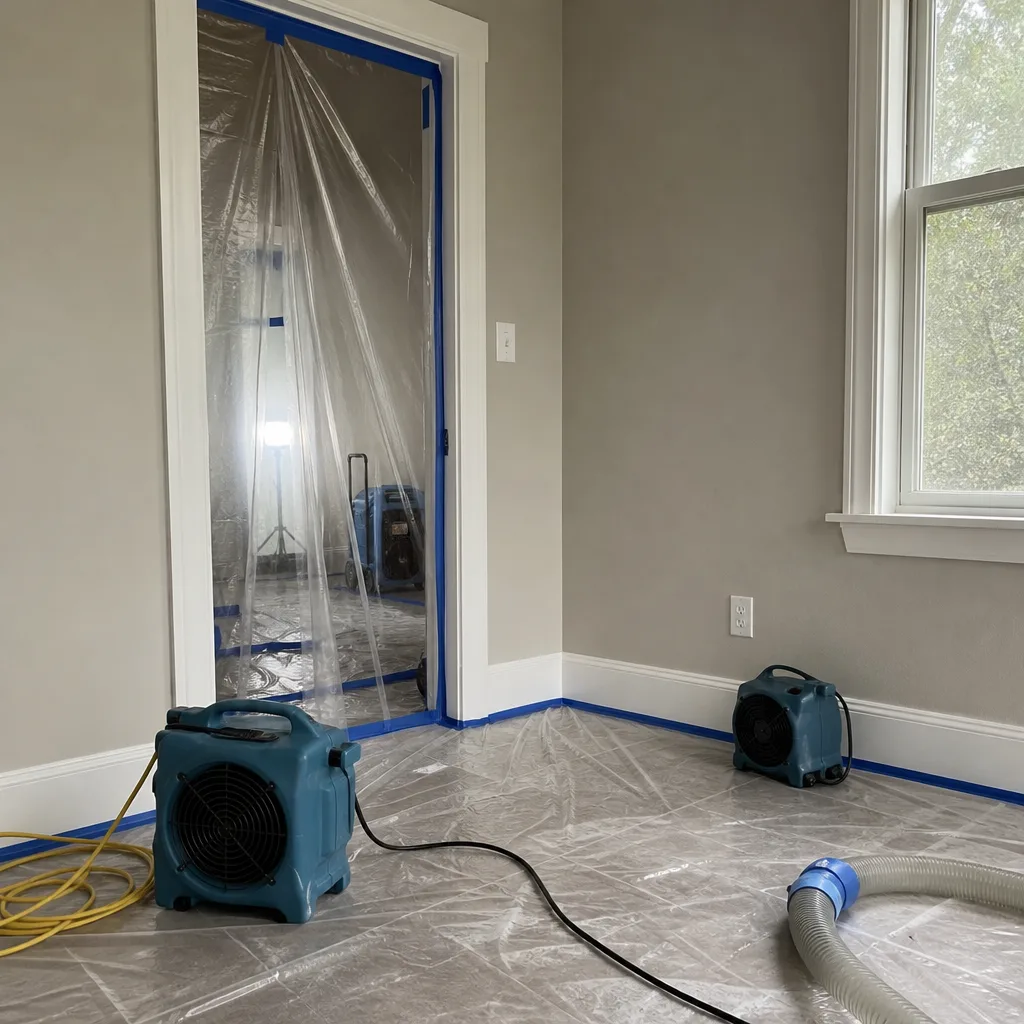
Wells Branch’s MUD-managed infrastructure means water main breaks and sewer backups can affect whole streets at once. Our crew responded to a water main break on Shoreline Drive that sent water into three adjacent garages sloping toward the street drain. We used Dri-Eaz dehumidifiers and XPOWER air movers after extracting over 200 gallons, then coordinated with the Wells Branch MUD to ensure the curb drains were cleared before final moisture readings confirmed the slab was dry. That’s the kind of multi-home staging other restoration companies aren’t set up for.
Garage Conversion Flooding
Low-lying garage conversions in older Wells Branch sections flood during summer gully washers because the street drain capacity gets overwhelmed and water runs over the curb. Many of these conversions have drywall directly on slab with no moisture barrier, so water wicks up fast. We extract first, pull baseboards to let the wall cavities breathe, and set up containment before mold has a chance to colonize. The first 24 hours decide whether this is a $1,500 dry-out or a $7,000 rebuild.
Trusted Brands We Service in Wells Branch
We run professional-grade restoration equipment in Wells Branch, not rental-store fans. Dri-Eaz dehumidifiers keep the air dry enough to pull moisture from slab and drywall. XPOWER air movers create the airflow that moves that moisture out. Phoenix equipment handles the low-grain refrigerant drying some older Wells Branch homes need when humidity stays stubborn. Every unit is IICRC, RIA, and IFA standard, and we stock the parts locally so your drying job doesn’t stall waiting on a shipment. If a dehumidifier fails at 11 p.m., we swap it before morning.
See the difference
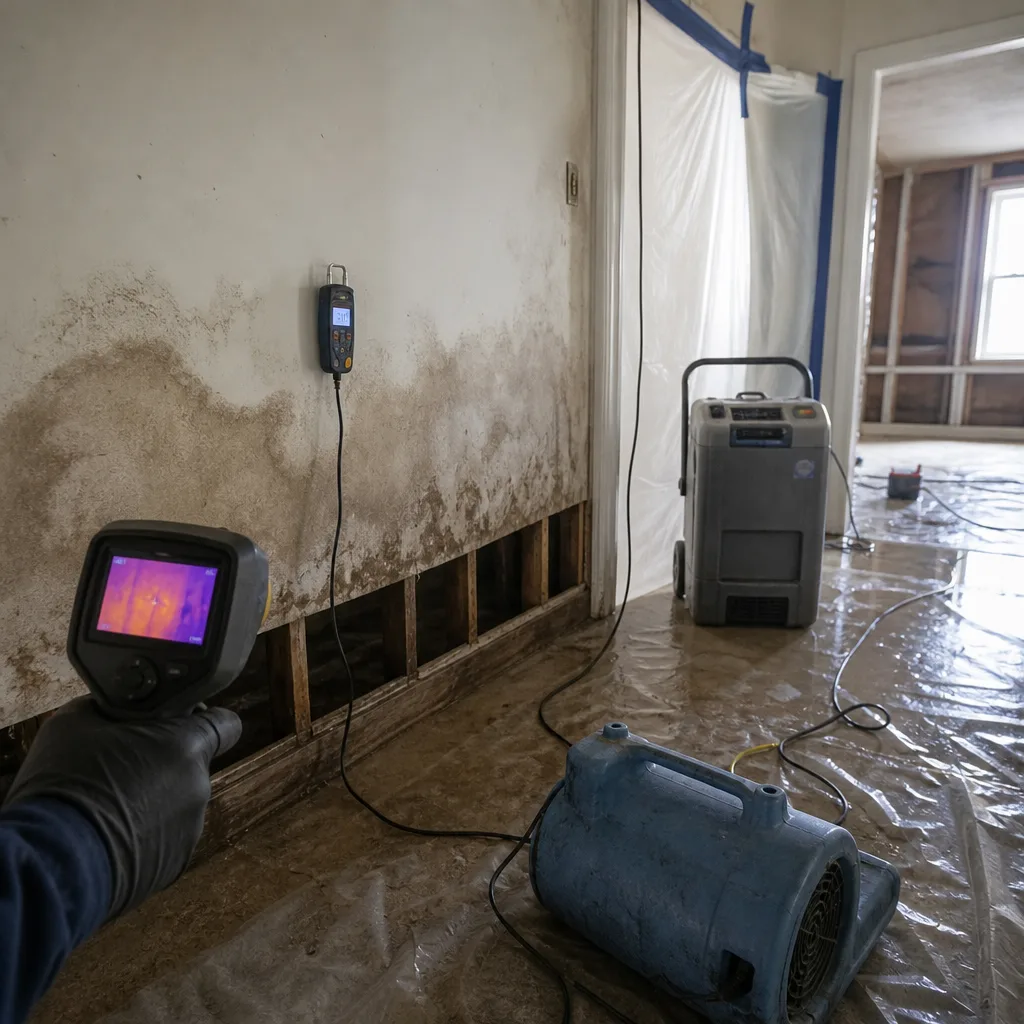 Before
 After
After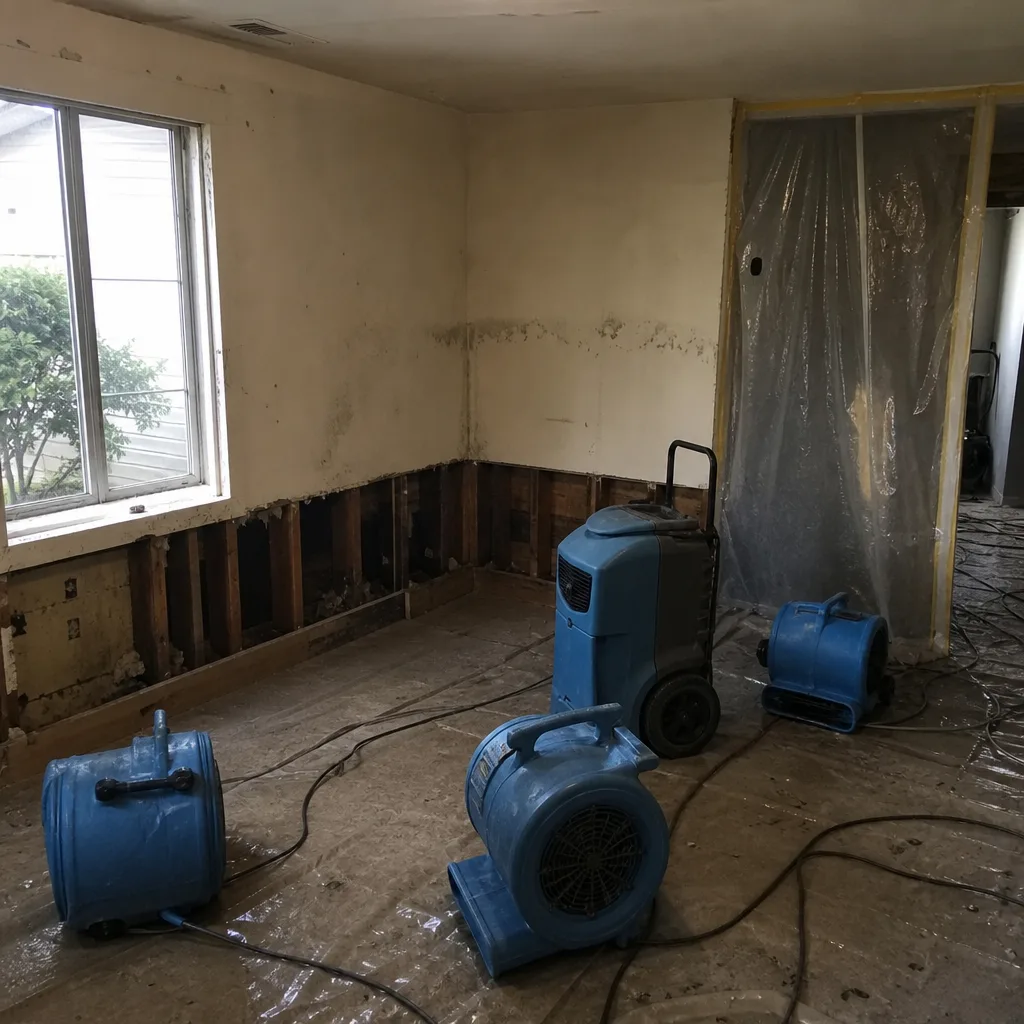 Before
 After
After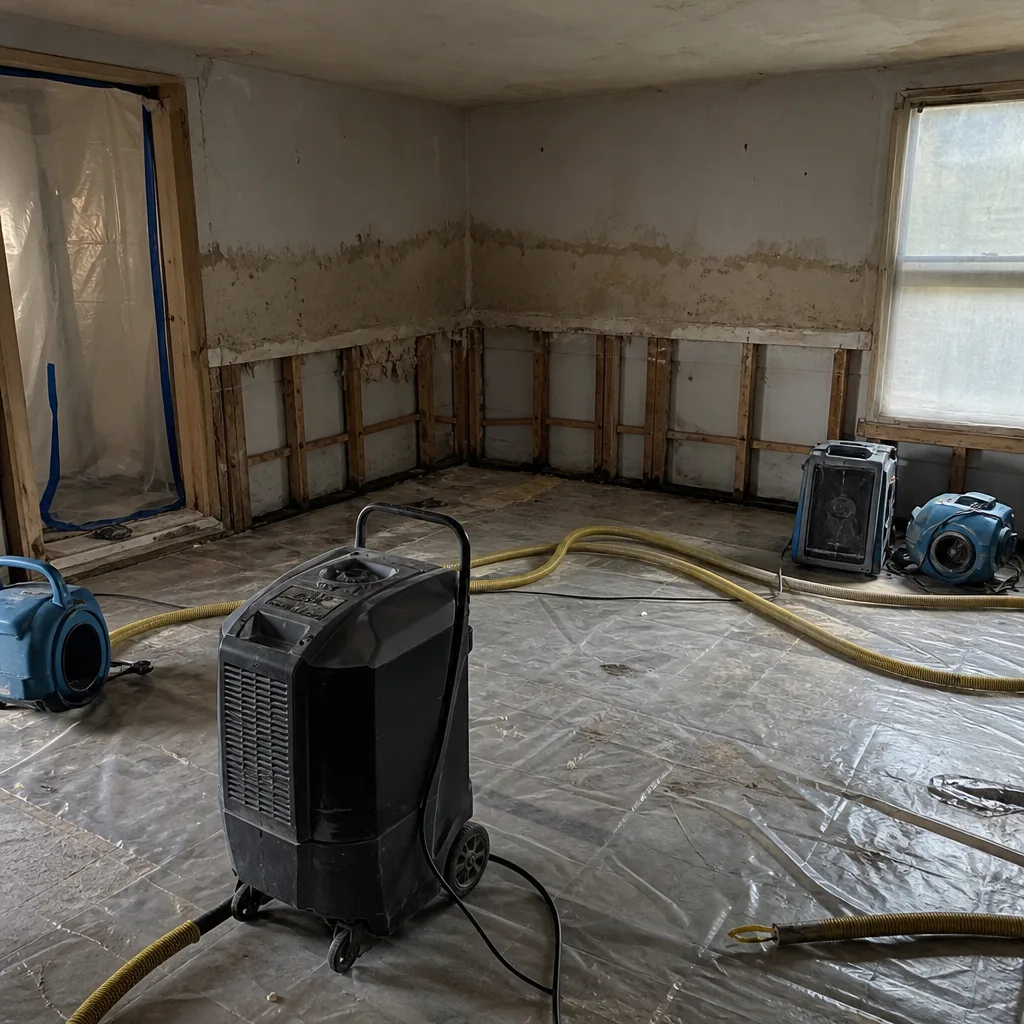 Before
 After
AfterCommon Water Damage Restoration Problems We See in Wells Branch Homes
- Original cast-iron drains failing at the slab penetration. Homes built from the 1970s through the 1990s in Wells Branch frequently have cast-iron drain lines that corrode where they pass through the concrete slab. By the time you see water on the floor, the pipe has usually been leaking into the slab for weeks or months, and the repair requires under-slab tunneling.
- Slower drainage during flash floods. Central Texas flash floods and summer gully washers can overwhelm local storm drains in minutes. Older slab-on-grade homes don’t have the elevation or drainage to shed that volume quickly, so water backs up against brick veneer and fiberboard siding and works its way inside.
- Sunken living rooms in older sections. Many Wells Branch homes built in the 1980s have conversation pits or sunken living rooms that sit lower than the surrounding slab. Water naturally flows to the lowest point, which means these rooms flood first and dry last.
- Garage slopes that drain toward the house. Several Wells Branch garages slope toward the street drain, which sounds fine until the drain backs up. Then the water reverses direction and runs straight under the garage door into the home. We see this on Shoreline Drive and surrounding streets during every heavy downpour.
Pricing for Water Damage Restoration in Wells Branch, TX
A typical water damage restoration job in Wells Branch runs $2,100 to $6,800. Emergency water extraction alone costs $400 to $1,200. Full structural drying with dehumidifiers and air movers runs $2,500 to $5,500 depending on how many rooms are affected and how long the water sat. Burst pipe restoration in a slab home, including under-slab tunneling, starts around $3,500 and can reach $8,000 if drain lines need full replacement. Ceiling and roof leak water damage usually runs $900 to $2,800. The main variables are square footage, water category, and whether original cast-iron plumbing is involved. We put every number in writing before work starts, and the digital invoice gets texted to your phone so you can pay from the link. Call (325) 237-2088 for an exact quote. Estimates are free.
We Also Serve Cities Near Wells Branch
Our Water Damage Restoration crews cover the entire metro area, not just Wells Branch. We regularly respond to emergencies in Austin, Pflugerville, San Marcos, and Jollyville. If you’re a homeowner in one of those communities dealing with a slab leak, a flooded garage, or a burst pipe, we answer the phone the same way: live person, written price, tracked arrival time.
Serving Wells Branch, TX - Our Local Coverage Area
We’re based in the Wells Branch area and know this community well. Use the map below to see our service coverage - if you’re nearby, we can almost certainly help.
FAQs About Water Damage Restoration in Wells Branch
MUD main breaks in Wells Branch can affect multiple homes on the same street at once, which means restoration crews stage multi-home responses rather than handling one address at a time. The timeline depends on whether the district has shut the water off and cleared the curb drains. If water is still flowing when we arrive, extraction is a holding action, not a solution. We coordinate directly with the district’s emergency line so we know when the source is actually stopped, and we don’t start final drying until it is. If you’re dealing with a street-wide break, call (325) 237-2088 and we’ll stage a crew on your block.
Cast-iron drains corrode from the inside out over 30 to 50 years, and the failure point is almost always where the pipe passes through the concrete slab. The slab puts pressure on the pipe, and the soil underneath shifts with Central Texas drought and flood cycles, creating stress fractures. Wells Branch homes from the 1970s through the 1990s are now in the exact age range where these failures happen. Repair requires under-slab tunneling, which is invasive but sometimes cheaper than rerouting drains through walls. We’ll give you a written scope before any demolition starts.
First, cut power to the garage if any outlets are submerged. Second, call us at (325) 237-2088. We’ll extract standing water immediately because garage conversions with drywall on slab wick moisture fast. Third, don’t move wet items out into the yard and assume the slab will air-dry on its own. It won’t. The moisture trapped between the slab and the drywall creates the exact conditions mold needs, and in a Central Texas summer, that can happen in 48 hours. The difference between a $1,500 extraction and a $7,000 rebuild is how fast the water comes out.
A slab-on-grade home traps moisture between the concrete and the flooring, so we take readings directly on the slab surface and inside wall cavities using penetrating and non-penetrating meters. A pier-and-beam home has airflow under the floor, which changes how water dries and where it travels. In Wells Branch, most homes are slab-on-grade, so our drying targets are set for concrete, not wood subfloor. That means lower relative humidity targets and longer drying times for drywall that’s been in contact with a wet slab. We document every reading and text you the numbers as they drop, so you can see the progress yourself.
Sunken living rooms sit below the surrounding slab elevation, so water from any source – a burst pipe, a MUD main break, or a gully washer – flows downhill to that lowest point and pools there. In a flash flood, stormwater that overruns the curb will find the path of least resistance into the home, and a sunken living room is often the first stop. These rooms also dry slower because they’re recessed, which means air movement requires deliberate placement of XPOWER air movers to push moisture up and out. Call us if yours took on water, even if it looks like it’s drying on its own.
Written by Blake Sorensen, Owner at Wendell Restoration Austin, serving Wells Branch and surrounding communities since 2006.