
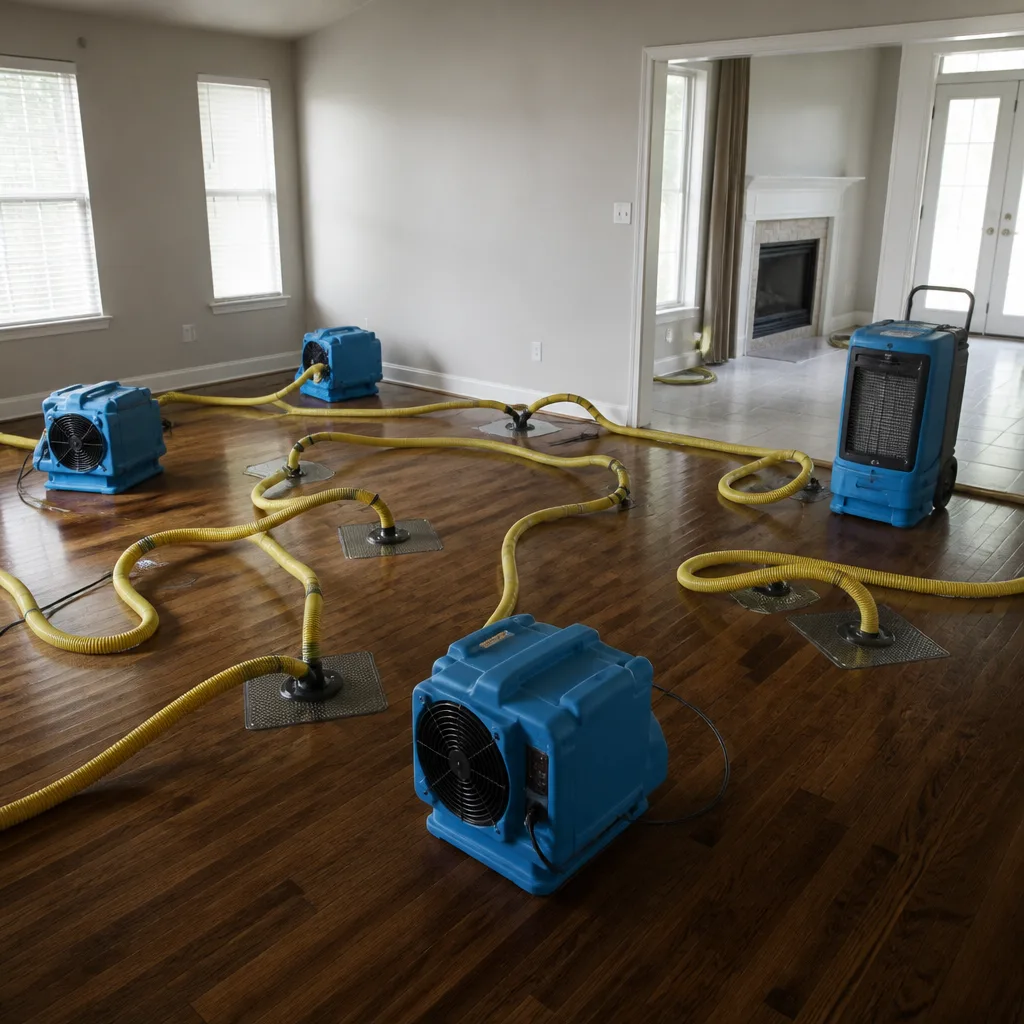
 Water damage drying
 Fire & smoke cleanup
 Mold remediation
 Storm response
 Sewage cleanup
 Reconstruction
Free visual inspection and a written scope of work before any mitigation begins - photos, moisture readings, and drying logs go in your claim file
The scope we write is the scope we bill. Anything new gets shown to you, in writing, before we touch it.
Get your free estimateFast, Reliable Water Damage Restoration Across Cedar Park
Water damage in Cedar Park moves fast, especially after the hailstorms and flash floods this part of the Hill Country is known for. A burst supply line or storm-punched roof can saturate drywall, delaminate flooring, and push moisture into slab foundation cracks within hours. We respond to Cedar Park homes with a written price before any work starts, a live technician arrival time you can track on your phone, and photo updates by text so you know exactly what we found and what we did. Call (325) 237-2088 and a live person answers, 24/7. Not a voicemail. Not a callback queue. That matters when water is spreading through your Buttercup Creek living room at 2 a.m.
Why Wendell Restoration Austin Is Cedar Park’s Preferred Water Damage Restoration Company
We’ve worked Cedar Park long enough to know its housing stock block by block, from 1980s ranch-style homes with aging copper supply lines to the newer subdivisions built after 2000 with open floor plans and composition shingle roofs. Our technicians are background-checked and uniformed, and they show up with a live arrival time, not a four-hour window. Every job follows IICRC, RIA, and IFA standards, using professional-grade drying equipment from Dri-Eaz, Phoenix, and XPOWER. We’re part of the Relay Home Co. family, founded in 2006, and every Cedar Park job carries The Relay Visibility Guarantee: you know who is coming, when they’ll be there, and exactly what it costs. Blake Sorensen leads our team, and his name goes on the written scope before a single tool leaves the truck. That’s the standard.
Restoration work we handle
Flooded Basement in Cedar Park
Flooded basements in Cedar Park tend to show up in the older subdivisions, where a lower level or sunken utility room can collect water from a failed sump pump, a slab leak, or the kind of intense thunderstorm Flash Flood Alley throws at us every spring. A typical flooded basement extraction and drying job in Cedar Park runs $1,800 to $4,600 depending on square footage, water category, and how long the water sat. We handle the water removal first, then set up structural drying and monitor it with psychrometric readings (tracking the air’s moisture level so we know when your home is truly dry, not just surface-dry). The written price you agree to before we start is the price on the digital invoice we text you afterward. That number does not change at the door.
Category 2 and 3 Water in Basements
If the water came from a washing machine overflow or a sump failure, it’s often Category 2, which means it carries contaminants and needs antimicrobial treatment after extraction. If it came from outside flood water or a sewage backup, it’s Category 3, and that requires full containment, removal of affected porous materials, and disinfection under IICRC protocol. In a 1980s Cedar Park ranch with a basement utility room, Category 3 water almost always means cutting out wet drywall and treating the concrete slab, because that slab sits on clay-heavy soil that holds moisture against the foundation long after the surface looks dry.
Foundation and Clay Soil Considerations
Cedar Park sits on expansive clay soils that shift with moisture. That means a flooded basement here isn’t just a drying job. Water can migrate through slab cracks and capillary rise, feeding moisture back into the basement even after extraction. We check for this on every basement job in Cedar Park. If we find a slab leak or weep, we address it before drying is considered complete, because skipping that step produces the same re-soaked basement three months later.
Water Extraction in Cedar Park
Water extraction in Cedar Park is the first and most urgent step after any flood, burst pipe, or storm intrusion. We use truck-mounted and portable extraction units to remove standing water fast, then deploy Dri-Eaz air movers and Phoenix dehumidifiers to pull moisture from carpets, pad, drywall, and subfloor. Typical water extraction and drying for a single room in Cedar Park runs $900 to $2,200, while a whole-home extraction after a roof failure or slab leak runs $3,000 to $7,500. Every extraction includes a written drying log, so you can track daily moisture readings and know exactly when the home reached drying standard. That log also matters for your insurance claim.
Storm-Driven Extraction on Whole Blocks
After a major hailstorm, the extraction work in Cedar Park gets compressed. Entire blocks in neighborhoods like Buttercup Creek and Forest Oaks need roof tarping, water extraction, and structural drying at the same time, because hundreds of composition shingle roofs on similarly aged homes fail in the same hour. That creates a scramble for equipment and adjuster time that is far more concentrated than the scattered storm damage in nearby Round Rock. We keep our Cedar Park response stocked for that reality. Our crews stage drying equipment and extraction units before the storm season peaks, which is why we can still show up with a tracked arrival time when every other mitigation company is booked solid.
Moisture Mapping and Documentation
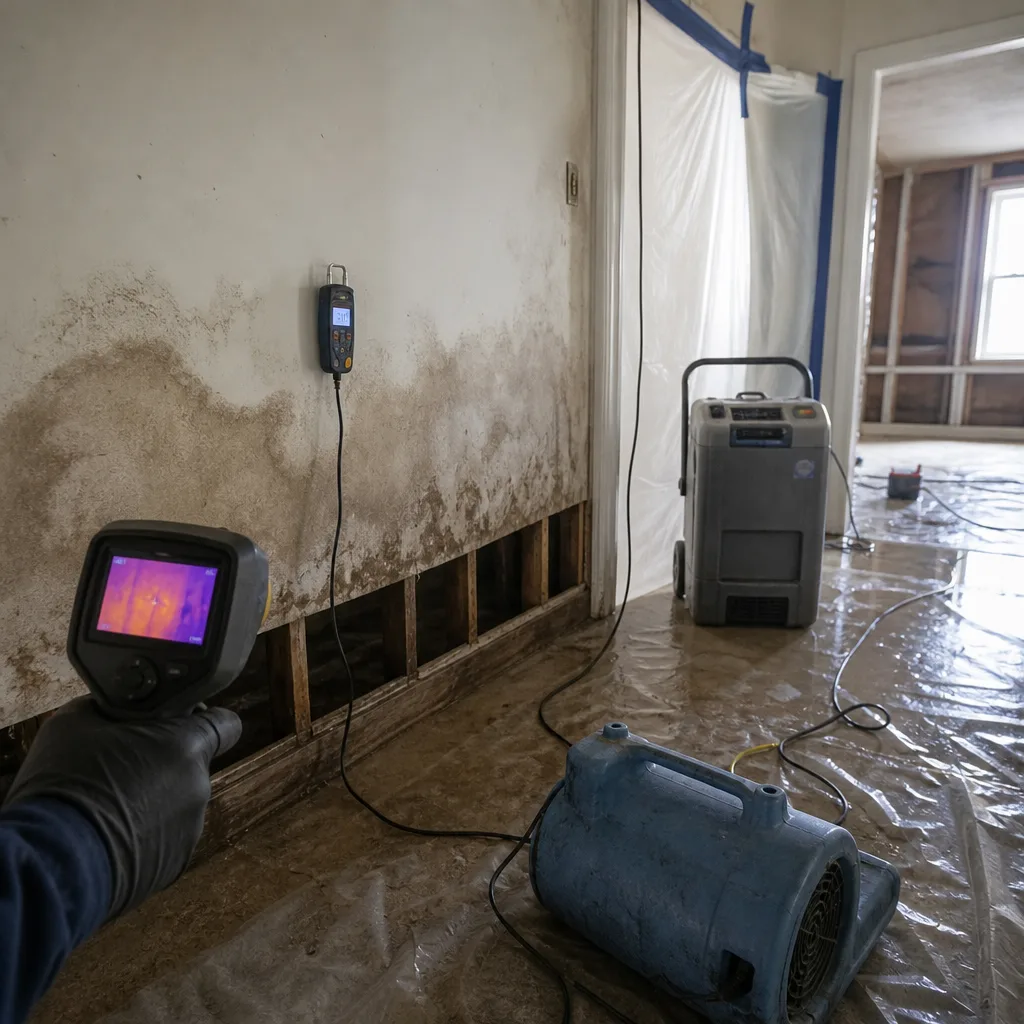
Before we extract, we map moisture across ceilings, walls, and floors with thermal imaging and penetrating meters. That map tells us where the water actually traveled, not just where it pooled. We photograph everything. You get the before-and-after photos by text, and your adjuster gets a clean documentation package that supports your claim. Direct adjuster coordination is part of the job, not an add-on.
Trusted Brands We Service in Cedar Park
We service and deploy professional restoration equipment from Dri-Eaz, Phoenix, XPOWER, B-Air, and Injectidry, the same brands used on commercial loss sites across Texas. Because Cedar Park’s storm season hits fast, we keep local stock and spare parts for the equipment we run here, so a failed dehumidifier motor doesn’t pause your drying schedule. Fast turnaround on equipment repairs means the drying keeps moving, and the written drying log stays unbroken. The number on your invoice stays the number you pay.
See the difference
 Before
 After
After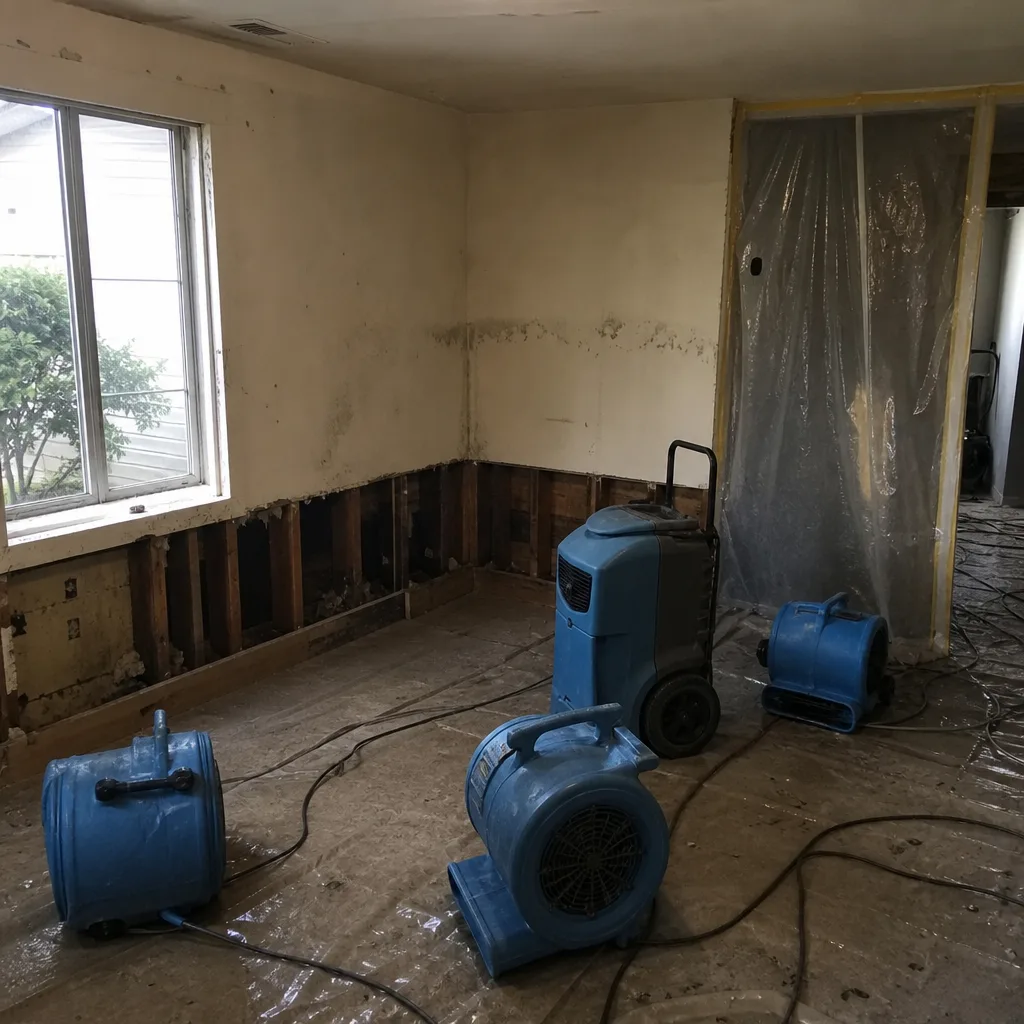 Before
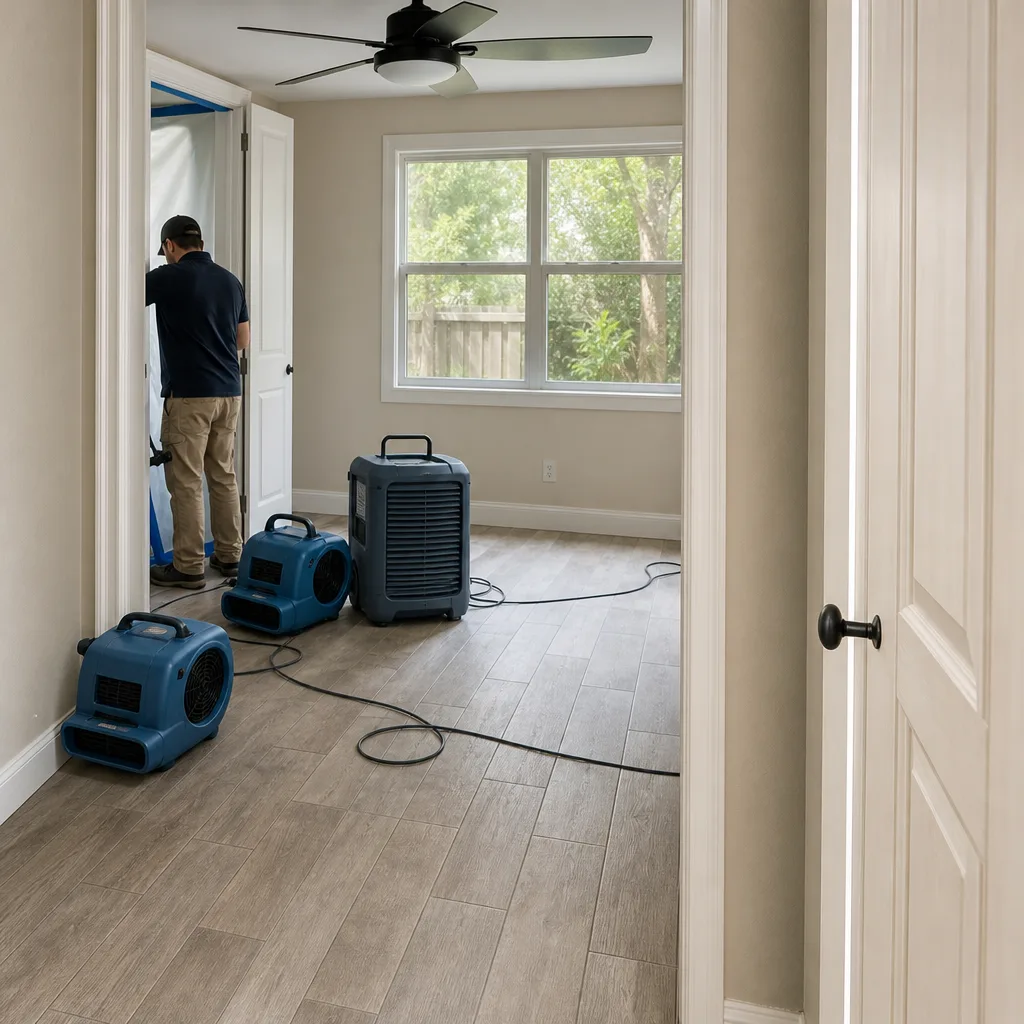 After
After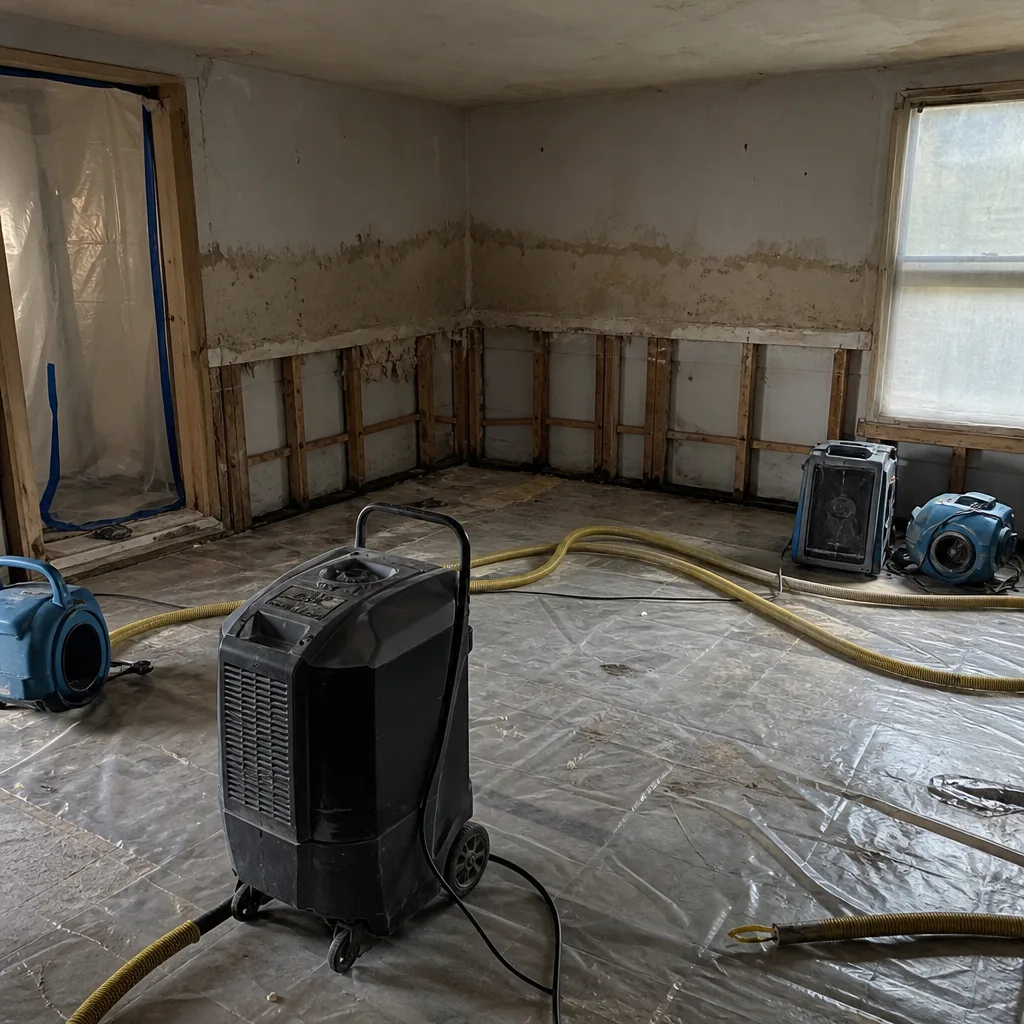 Before
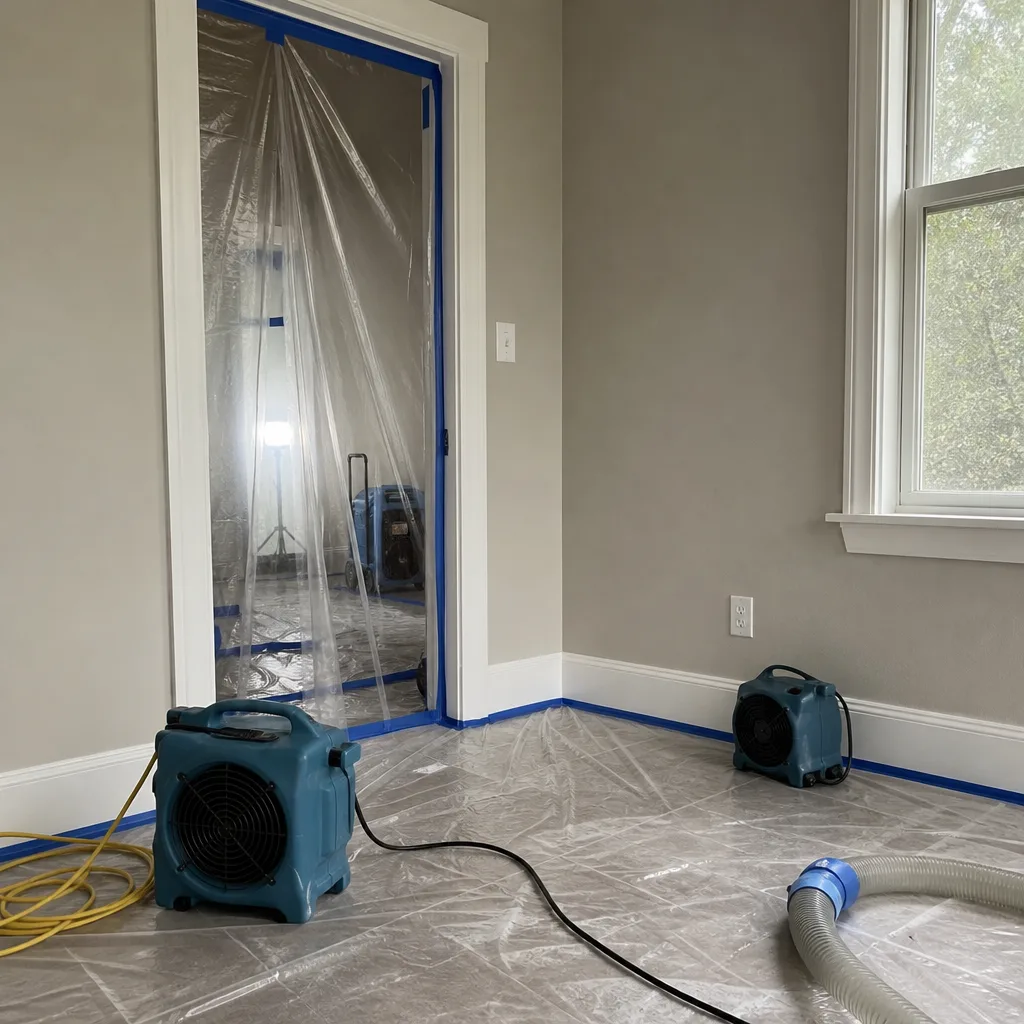 After
AfterCommon Water Damage Restoration Problems We See in Cedar Park Homes
- Hail-damaged composition shingle roofs. Cedar Park’s newer subdivisions were built largely since 2000 with composition shingle roofs that fail in clusters during spring hailstorms, sending water into attics and top-floor ceilings. Whole blocks need simultaneous mitigation, and homeowners who wait on an adjuster often pass the 48-hour mold window before drying even starts.
- Slab leaks in 1980s ranch-style homes. The original copper supply lines in Cedar Park’s older housing stock are reaching failure age. A pinhole leak under a slab can run for weeks before anyone notices, saturating flooring and wicking up drywall from the bottom edge.
- Clay soil foundation movement. Expansive clay soils shift with seasonal moisture changes, opening slab cracks that let water intrude during heavy rain or plumbing failures. Moisture that enters through a foundation crack keeps returning until the crack is addressed and the soil moisture stabilized around the perimeter.
- Open floor plan contamination spread. In Cedar Park’s larger post-2000 homes, open floor plans mean Category 2 or 3 water can aerosolize contaminants across a wide, connected space. Skipping containment during mitigation spreads the problem into areas that were never wet, which is why we set containment on every affected Cedar Park job, not just the obvious ones.
Pricing for Water Damage Restoration in Cedar Park, TX
We Also Serve Cities Near Cedar Park
Beyond Cedar Park, our Water Damage Restoration team handles jobs in Pflugerville, Austin, Manor, and Buda. Each of those markets has its own housing mix and storm profile. The Cedar Park playbook, with its hailstorm-driven block failures and clay-soil foundation issues, is what we bring to every job in Cedar Park, and it’s a playbook built from years of local mitigation work, not a template from another city’s page.
Serving Cedar Park, TX - Our Local Coverage Area
We’re based in the Cedar Park area and know this community well. Use the map below to see our service coverage - if you’re nearby, we can almost certainly help.
FAQs About Water Damage Restoration in Cedar Park
Newer Cedar Park subdivisions built after 2000 use modern insulation and open floor plans, which means moisture and contaminants spread faster and farther than in older Austin homes with compartmentalized rooms and plaster walls. Mitigation in those homes requires early containment and more aggressive air movement to prevent aerosolized Category 2 or 3 water from reaching areas that were never wet. Call (325) 237-2088 and we’ll explain what your specific floor plan needs before anyone touches a tool.
Mold can begin within 48 to 72 hours on wet drywall and insulation after a hailstorm breaches a roof, which is why waiting on an adjuster’s visit before starting mitigation is risky. In Cedar Park neighborhoods like Buttercup Creek and Forest Oaks, where entire blocks need simultaneous roof work after a storm, that adjuster delay can push past the mold window. We document everything for your claim and start extraction immediately. Call (325) 237-2088 for a same-day assessment and a written price before work starts.
Category 3 water is grossly contaminated, from sewage backup or outside flood water, and it requires full containment, removal of saturated porous materials, and disinfection under IICRC protocol. In a 1980s Cedar Park ranch with a basement utility room, that typically means cutting out wet drywall, treating the concrete, and checking the slab for cracks that could reintroduce moisture from the clay soil underneath. Call (325) 237-2088 and a live person will walk you through what your situation requires.
Yes. Cedar Park’s expansive clay soils shift with moisture, and that movement opens slab cracks that let water enter during storms or plumbing failures, and it can also push moisture back into a basement or lower level after drying appears complete. We check for slab leaks and capillary rise on every Cedar Park extraction job, and we address them before we call the structure dry. Ask for a foundation assessment with your estimate; we’ll include it in the written scope.
A written drying log documents daily moisture readings across every affected area, proving the home reached drying standard before we stop equipment. That log supports your insurance claim, verifies the IICRC-standard process, and shows exactly when the structure was returned to a safe moisture level. We provide a written drying log on every Cedar Park job, along with before-and-after photos by text. Call (325) 237-2088 to get a log-supported estimate today.
Need water damage restoration in Cedar Park right now? Call (325) 237-2088. A live person answers, we put the price in writing before work starts, and you get a tracked arrival time. Water damage does not keep business hours, and neither do we.
Written by Blake Sorensen, Owner at Wendell Restoration Austin, serving Cedar Park with written pricing and guaranteed restoration work.