
 Water damage drying
 Fire & smoke cleanup
 Mold remediation
 Storm response
 Sewage cleanup
 Reconstruction
Free visual inspection and a written scope of work before any mitigation begins - photos, moisture readings, and drying logs go in your claim file
The scope we write is the scope we bill. Anything new gets shown to you, in writing, before we touch it.
Get your free estimateRestoration work we handle
See the difference
 Before
 After
After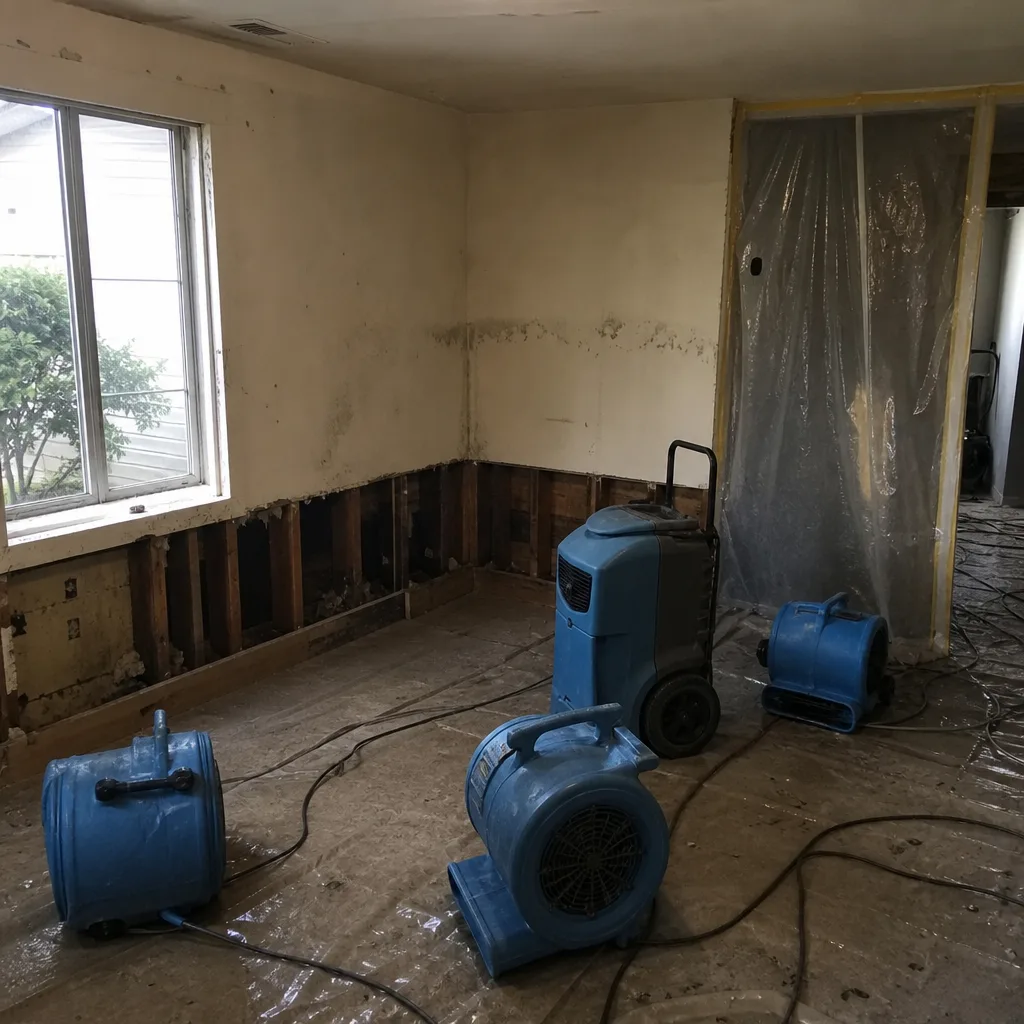 Before
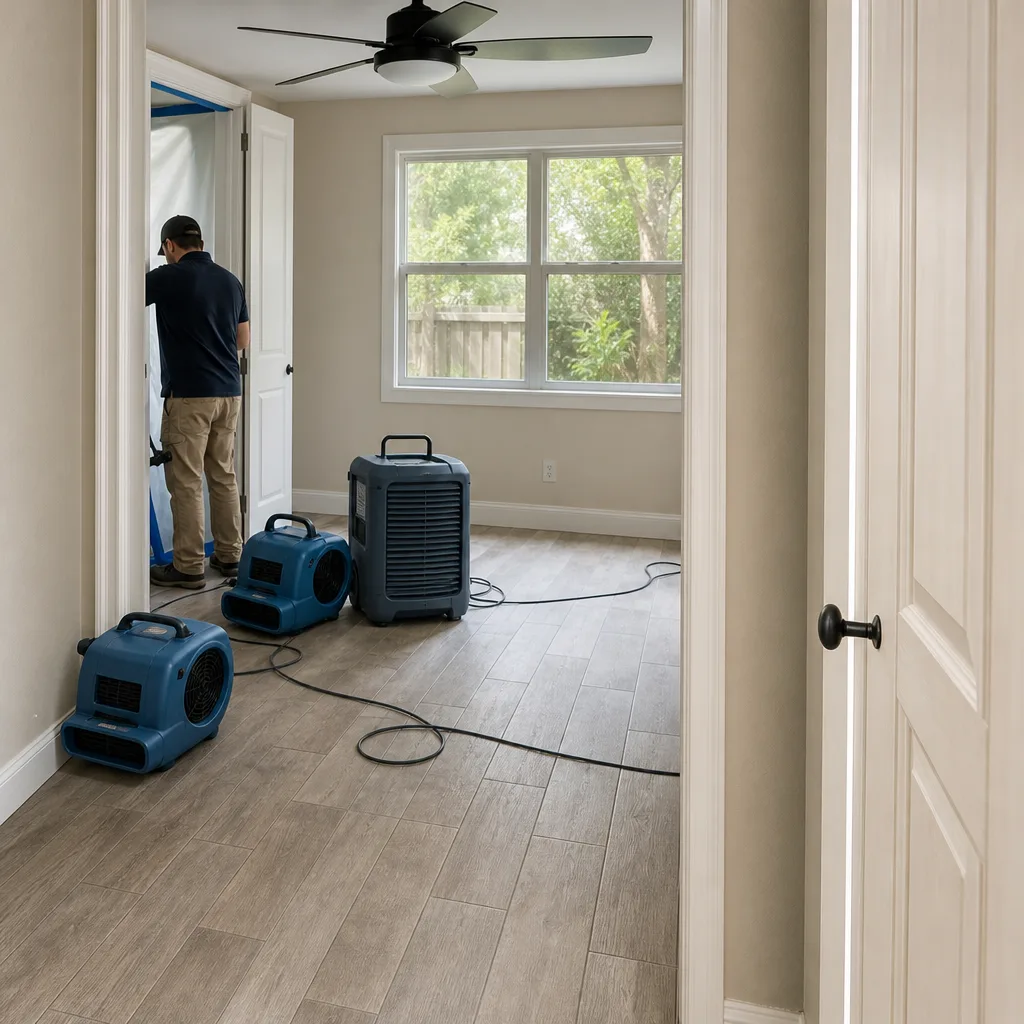 After
After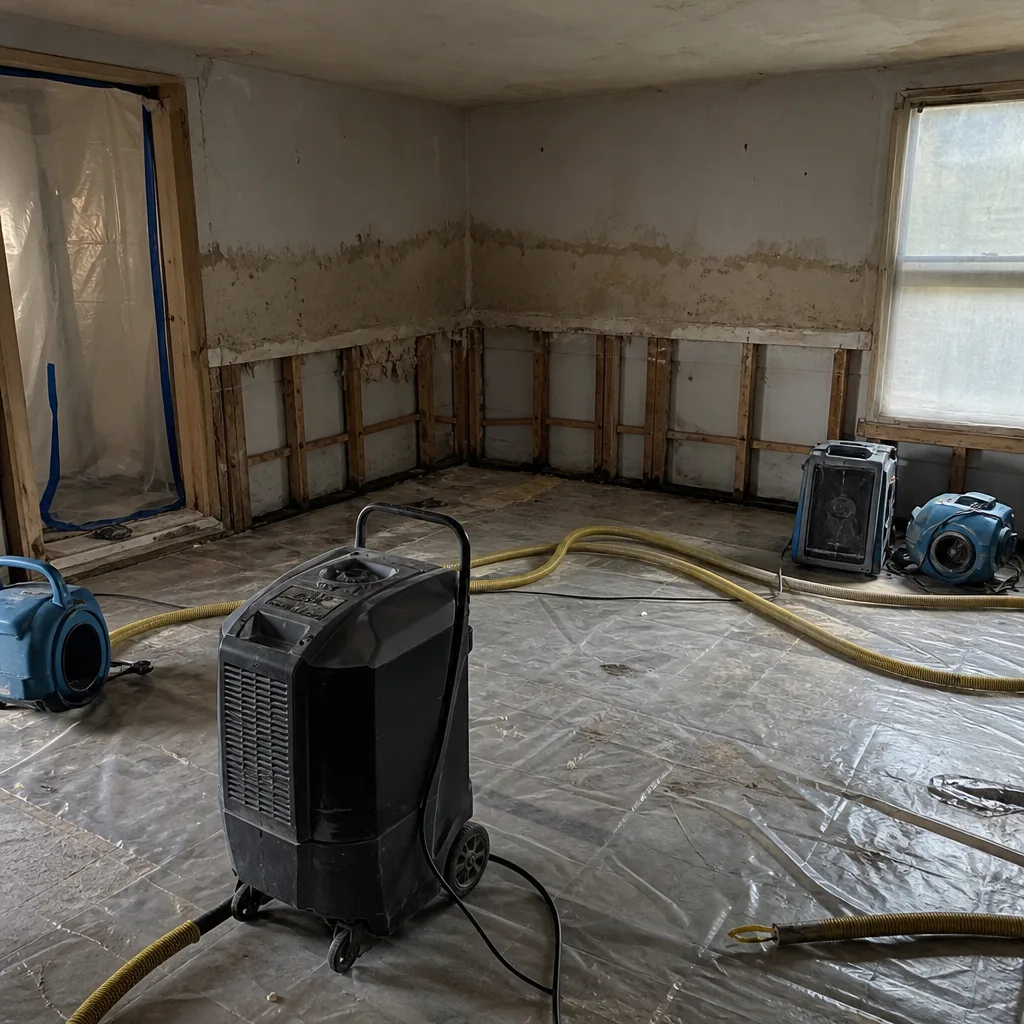 Before
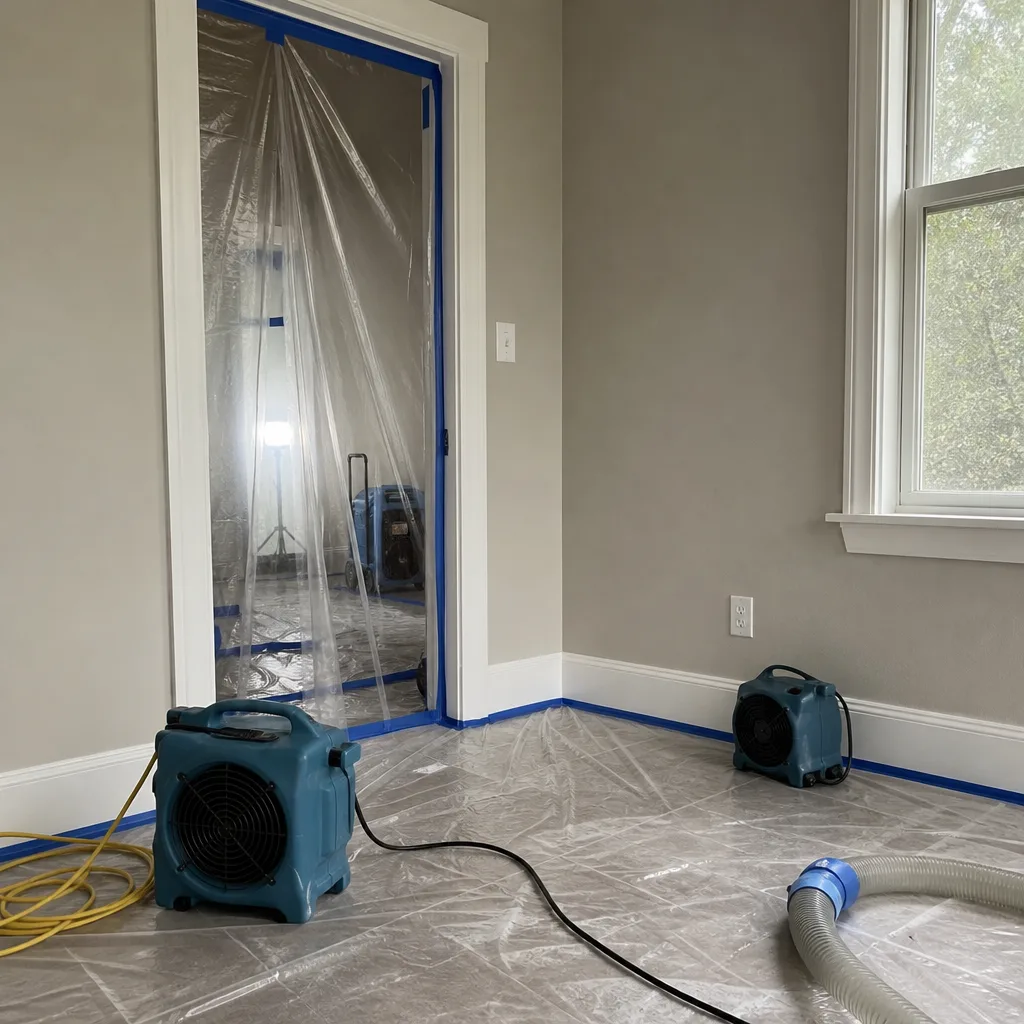 After
AfterStructural Drying & Dehumidification in Austin, TX
Our How Much Does Water Damage Restoration Cost? (2026 Price Guide) - Austin, TX shows that structural drying in Austin typically runs $1,800 to $4,200 for a standard single-room water event, with whole-home drying jobs ranging from $4,500 to $9,500 depending on square footage and how long water sat before extraction. Most jobs take 3 to 5 days of equipment runtime before we can certify the structure dry. That’s the honest range, and if you call Wendell Restoration Austin at (325) 237-2088, you’ll get a written price before any equipment touches your floor.
Structural drying is the unglamorous half of Water Damage Restoration in Austin that homeowners rarely think about until week two, when the baseboards start swelling and the hallway smells like a damp basement. Extraction and demolition get the attention. But drying is what actually stops mold, prevents framing rot, and keeps a $3,000 water claim from becoming a $30,000 rebuild. We run psychrometric drying on every job, which simply means we track the air’s moisture level, temperature, and humidity daily so we know when your home is truly dry, not just surface-dry to the touch.
Wendell Restoration Austin has done this work since 2006. We’re independently owned and operated as part of the Relay Home Co. family, and we run every drying job to the same standards the IICRC, RIA, and IFA set for commercial loss sites. That means Dri-Eaz and Phoenix dehumidifiers, moisture meters on every visit, and daily readings logged so you can see the numbers dropping.
When You Need Structural Drying & Dehumidification
You don’t always need structural drying after a leak. A small spill that you catch in five minutes and mop up with towels? That’s surface moisture, and a box fan might handle it. But these are the situations where we get called in, and they’re all situations where skipping professional drying costs more later:
- Water sat overnight or longer before you found it. Once water has 8 to 12 hours to migrate, it’s already wicked into drywall, subfloor, and framing. In Austin’s humidity, that migration happens faster than it does in El Paso.
- The leak came from a supply line, not a drain. A toilet overflow is gross but relatively clean. A burst supply line under the sink sprays pressurized water for hours before you notice, and that water travels sideways through wall cavities.
- Baseboards are swelling, paint is bubbling, or flooring is cupping. Those are visual signs the material is holding moisture. By the time you see cupping on hardwood, the subfloor underneath is wet too.
- Your humidity reading stays above 60% after a water event. Central AC in Austin pulls some moisture, but it’s not designed to dry saturated building materials. Running it hard for two weeks just drives your electric bill up while the framing stays wet.
- You smell a musty odor that won’t fade. That’s microbial activity starting. In Austin’s warm climate, mold can colonize wet drywall in as little as 48 to 72 hours.
- Your insurance adjuster flagged a Category 2 or Category 3 water loss. Gray water and black water need antimicrobial treatment applied after extraction and before drying. This isn’t a DIY situation.
Our Structural Drying & Dehumidification Process
Here’s how we run drying on a water loss in Austin, step by step. The sequence matters. Skip step two and you’re just blowing warm air at wet drywall for a week.
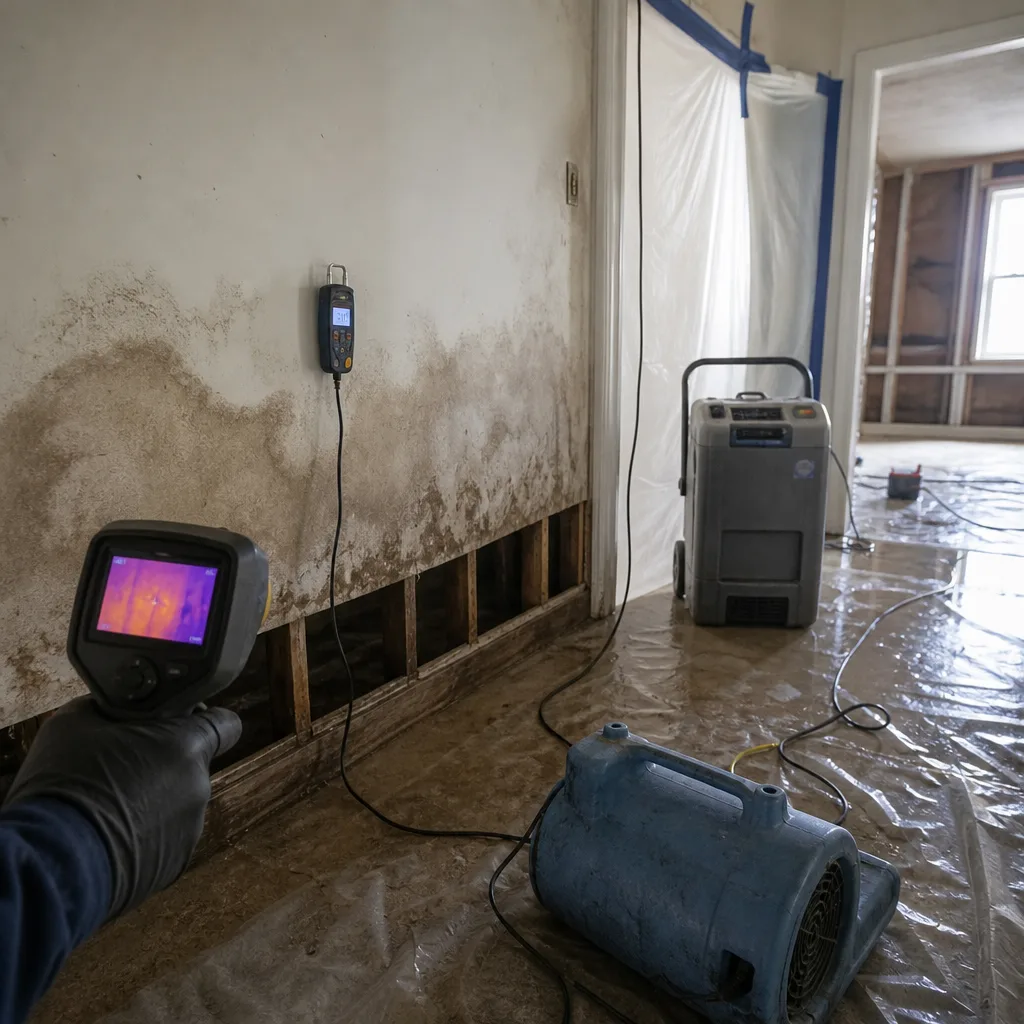
- Moisture mapping. A technician maps every affected area with a penetrating moisture meter and thermal imaging camera. We mark wet drywall, wet framing, wet subfloor, and wet insulation with chalk lines and record baseline readings. You get a copy of this map so you know exactly what needs to dry and why.
- Extraction and controlled demolition. Standing water comes out first with high-volume extractors. Then we cut out drywall and insulation that’s saturated beyond drying range. In Austin, where drywall is usually a standard 1/2-inch panel, we typically cut a 2-foot flood line rather than the 4-foot line some national franchises use. We remove only what can’t be saved, which saves you rebuild cost.
- Antimicrobial application. Every surface that stays gets treated with an EPA-registered antimicrobial before drying equipment goes in. This prevents mold from gaining a foothold during the 3 to 5 days the equipment runs. We apply it to framing, subfloor, and the back side of drywall we’re keeping.
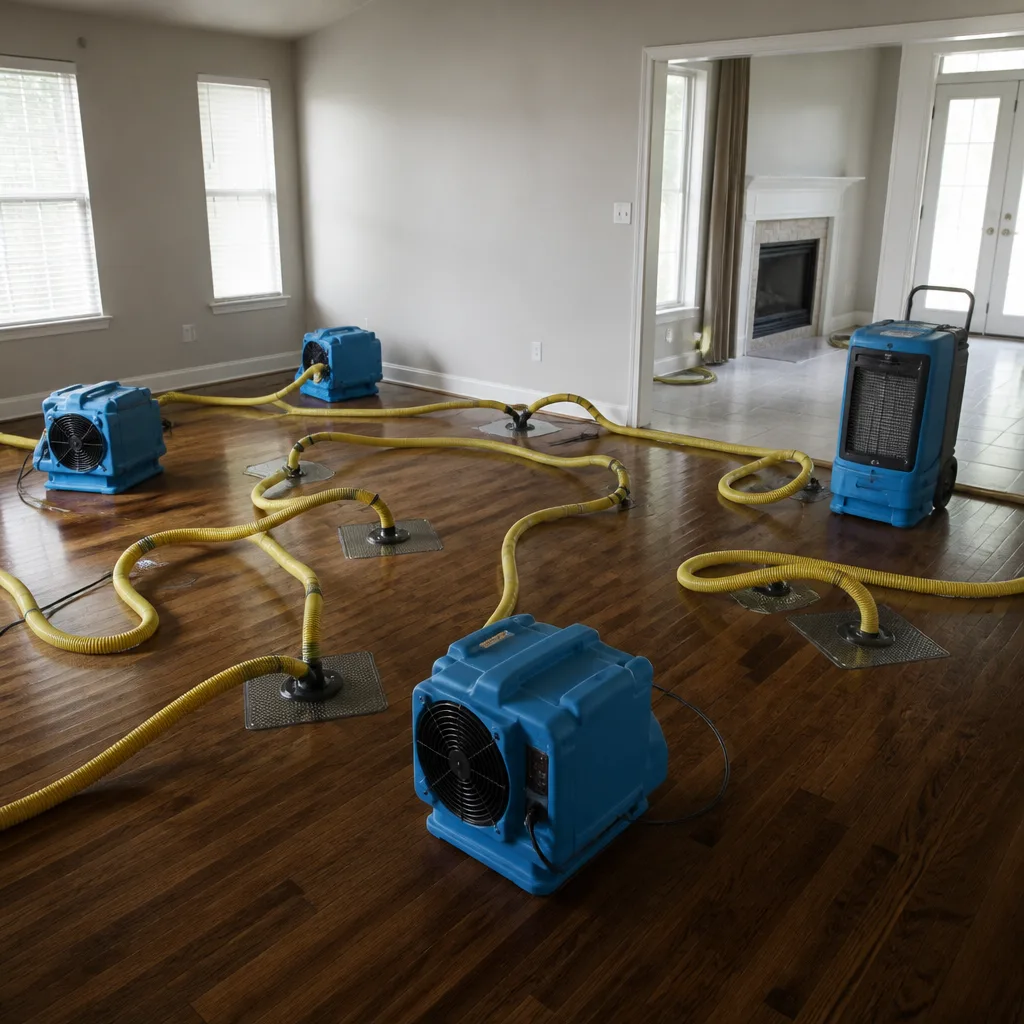
- Equipment placement and airflow. We deploy Dri-Eaz and Phoenix dehumidifiers and axial air movers in a calculated pattern. Not haphazardly pointed at the floor. Air movers go at 45-degree angles along walls to create a vortex across the wet surface. Dehumidifiers sized to the cubic footage of the affected space, not the square footage.
- Daily monitoring and documentation. A technician returns each day to log moisture readings, check equipment function, and reposition air movers as materials dry. You get before-and-after photos by text, and every reading goes into a drying log so there’s a record if your adjuster asks for one.
- Final verification and equipment pickup. When readings across all affected materials hit dry standard, we pull equipment, do a final visual inspection, and hand you a written summary with all readings. If anything isn’t at dry standard, we keep drying at no additional charge. That’s part of the 365-Day Done Right Promise we put in writing on every job.
Structural Drying & Dehumidification Pricing in Austin
The biggest cost variables in Austin are square footage affected, how long the water sat, and whether you’re in a slab-on-grade home or a pier-and-beam home. Pier-and-beam houses in neighborhoods like Hyde Park and Crestview dry faster because there’s airflow under the subfloor. Slab homes in newer developments like Mueller and Easton Park hold moisture longer because the concrete wicks water into the sill plate.
Here are honest line-item ranges for what we typically see on Austin jobs:
- Single room (bathroom, laundry, small kitchen): $1,800 to $3,200 for 3 to 4 days of drying. Includes moisture mapping, antimicrobial treatment, equipment, daily monitoring, and final documentation.
- Multiple rooms or a hallway plus adjacent rooms: $3,000 to $5,500. Usually 4 to 5 days of drying. Includes all of the above plus controlled demolition haul-off.
- Whole-home drying (slab foundation, single story): $4,500 to $7,800. Equipment count jumps to 6+ air movers and 2 to 3 dehumidifiers. 5 to 7 days typical.
- Whole-home drying (pier-and-beam): $4,000 to $6,500. Crawlspace airflow speeds drying, but crawlspace encapsulation or subfloor drying can add $800 to $1,500.
- Category 3 (sewage) drying: Add $500 to $1,200 for full antimicrobial protocol, PPE, and containment. This is not optional on black water jobs.
What affects the final number: the actual moisture readings, the affected square footage, whether insulation needs removal, how many days the equipment runs, and whether we need to open walls in multiple rooms. You’ll know the written price before any work starts. That’s not a “rough estimate subject to change.” It’s the number on the screen, and it’s the number you pay. No-hassle upfront pricing, no surprises at the end.
FAQs – Structural Drying & Dehumidification
How long does structural drying take in Austin?
Structural drying in Austin typically takes 3 to 5 days of continuous equipment runtime. Austin’s high summer humidity extends drying times compared to drier parts of Texas, which is why we run dehumidifiers longer here than a restoration crew might in Lubbock or Midland. Pier-and-beam homes dry faster than slab homes. We won’t pull equipment until moisture readings hit dry standard, even if that means an extra day or two at no additional charge. Call (325) 237-2088 and we’ll give you a straight answer on what to expect for your specific situation.
Is it cheaper to repair or replace water-damaged drywall?
Cutting and replacing saturated drywall usually costs $180 to $350 per sheet including labor and materials in Austin, while trying to dry saturated drywall often fails and sets you up for mold later. For Basement Water Removal and other below-grade damage, this risk is even higher. The drywall itself is cheap. The mold behind it isn’t. We cut only what can’t be saved, treat what stays, and dry the framing behind it. That’s the cost-effective path. For an exact number on your specific damage, call (325) 237-2088 for a free estimate.
Can you come today for emergency water damage in Austin?
Yes. Calls are answered by a live person, 24/7, and we dispatch background-checked, uniformed technicians with a live arrival time you can track. Water damage doesn’t keep business hours, and neither does Wendell. If you have standing water right now, call (325) 237-2088 and we’ll get a Water Damage Restoration Near Me in Austin, TX crew moving toward you.
What’s the difference between structural drying and just running fans?
Structural drying uses psychrometric monitoring to measure moisture inside the materials themselves, while fans only dry the surface. When only the surface dries, moisture stays trapped in the framing, subfloor, and wall cavities. That trapped moisture is what causes mold, wood rot, and that persistent musty smell. Fans feel like progress. Moisture meters tell the truth. We use meters on every visit and log every reading.
Does homeowners insurance cover structural drying?
Most Texas homeowners policies cover structural drying as part of Water Damage Restoration when the water event is sudden and accidental, like a burst pipe or supply line failure. Flood damage from rising water is a separate policy. We document everything with daily readings, photos, and a written drying log you can submit to your adjuster. If you’re not sure whether your situation is covered, call (325) 237-2088 and we’ll talk through it before you commit to anything.
Get a Written Price Before Any Work Starts
If you’ve got water in your Austin home right now, don’t guess. Call Wendell Restoration Austin at (325) 237-2088. You’ll talk to a live person, get a technician dispatched with a live arrival time, and receive a written price before any equipment gets unloaded. Every drying job includes the 365-Day Done Right Promise in writing: if it’s not done right, we make it right. That’s been our standard since 2006, and it’s not changing.
Written by Blake Sorensen, Owner at Wendell Restoration Austin, serving Austin.